
Digital education
TUMO in Germany
A state-of-the-art learning centre where children and young people aged 12 to 18 can expand their digital skills free of charge: that is TUMO in Germany – and KfW supports this concept with advice and funding. Within a few years, a nationwide network of TUMO centres will be established in large cities and rural regions.
Digital education in Germany (German with English subtitles)
Source: KfW / Detlev Karres / Thomas Schuch
TUMO concept originates from Armenia
Successful concept from Armenia
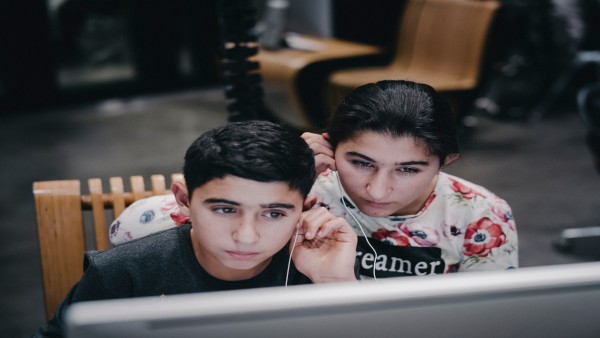
The TUMO learning centre is based on an innovative concept from Armenia. The idea, developed by Armenian-American entrepreneurs Sam and Silva Simonian, is now expanding.
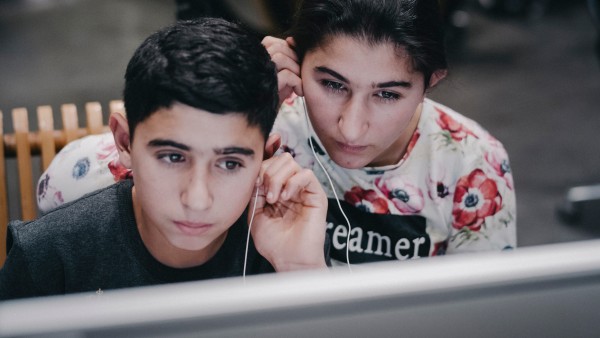
The TUMO centres are aimed at young people aged 12 to 18 and are free of charge. Young people can learn skills in digital technologies and creative methods, including animation, programming, 3D modelling and robotics, as well as music, film and photography. The students embark on their own digitally supported learning journey in self-study sessions and workshops. Digital skills and the use of various digital technologies are taught in a practical manner in workshops.
TUMO promotes digital skills for the German job market
KfW Executive Board member Melanie Kehr sees digital education for children and young people as a key factor in the competitiveness of the German economy:
"Our labor market urgently needs digital skills. The digital association Bitkom reports that by 2040, there will be a shortage of over 600,000 IT specialists in the German labor market. And that's exactly where TUMO comes in. TUMO is an education centre for children and young people where they can learn digital skills in a self-directed and creative way, outside of school and with a little more freedom."
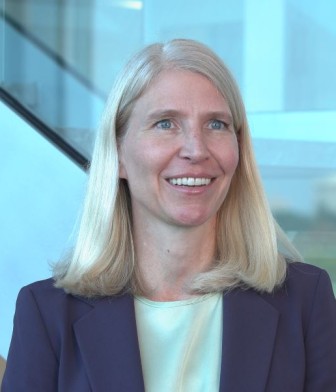
“Digital education is essential for the competitiveness of our economy.”
TUMO centre in Berlin
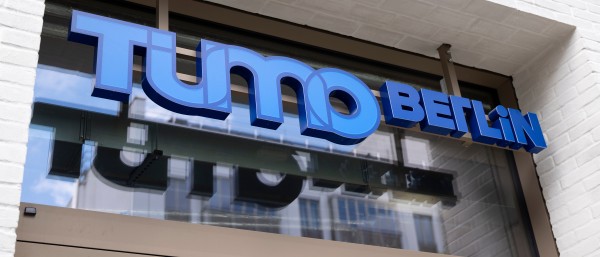
TUMO Berlin

The first German TUMO learning centre has been operated directly by TUMO Germany gGmbH.
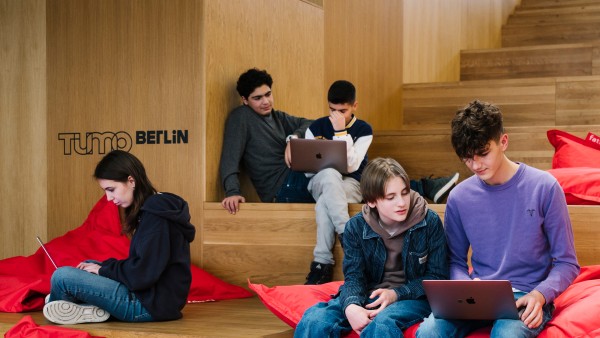
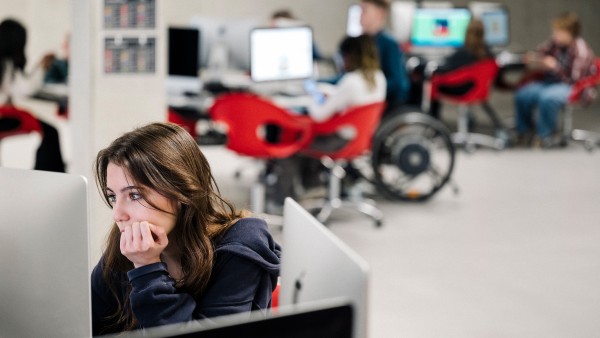
Read moreGermany's first TUMO centre opened in 2020 on Wilmersdorfer Straße in Berlin-Charlottenburg. It offers over 2,000 square metres of modern space for independent learning, workshop rooms, a music studio and space for events. During normal operation, up to 1,000 young people can use the centre each week to further their education in ten different subject areas and be creative together with friends.
TUMO Berlin is the result of an initiative by KfW, which established the first learning centre for promoting digital education among young people in Germany together with other partners.
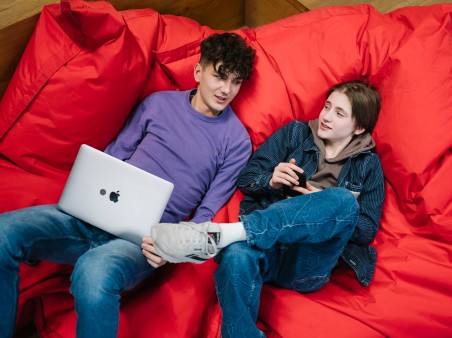
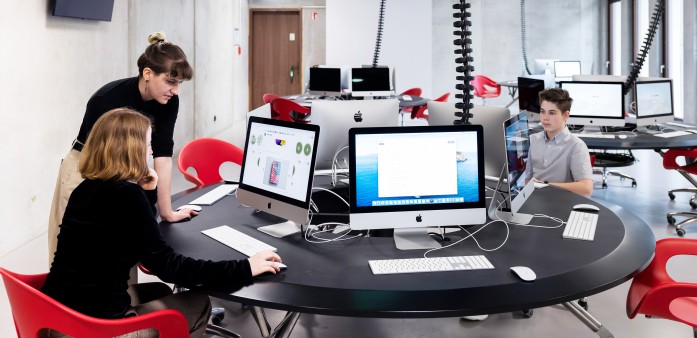
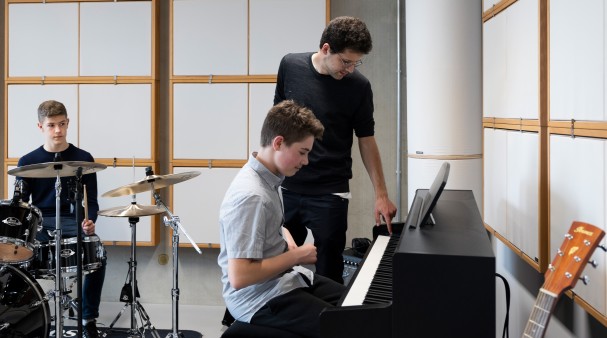
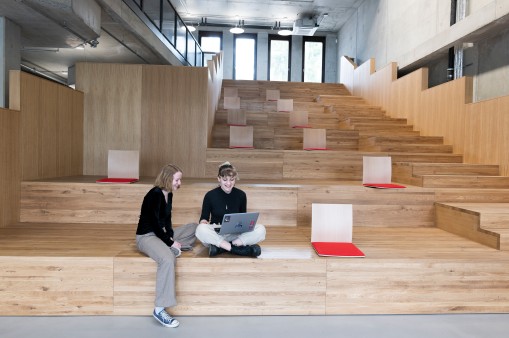
The modern interior design includes large cushions to loosen up the learning atmosphere.



Establishing a TUMO network in Germany
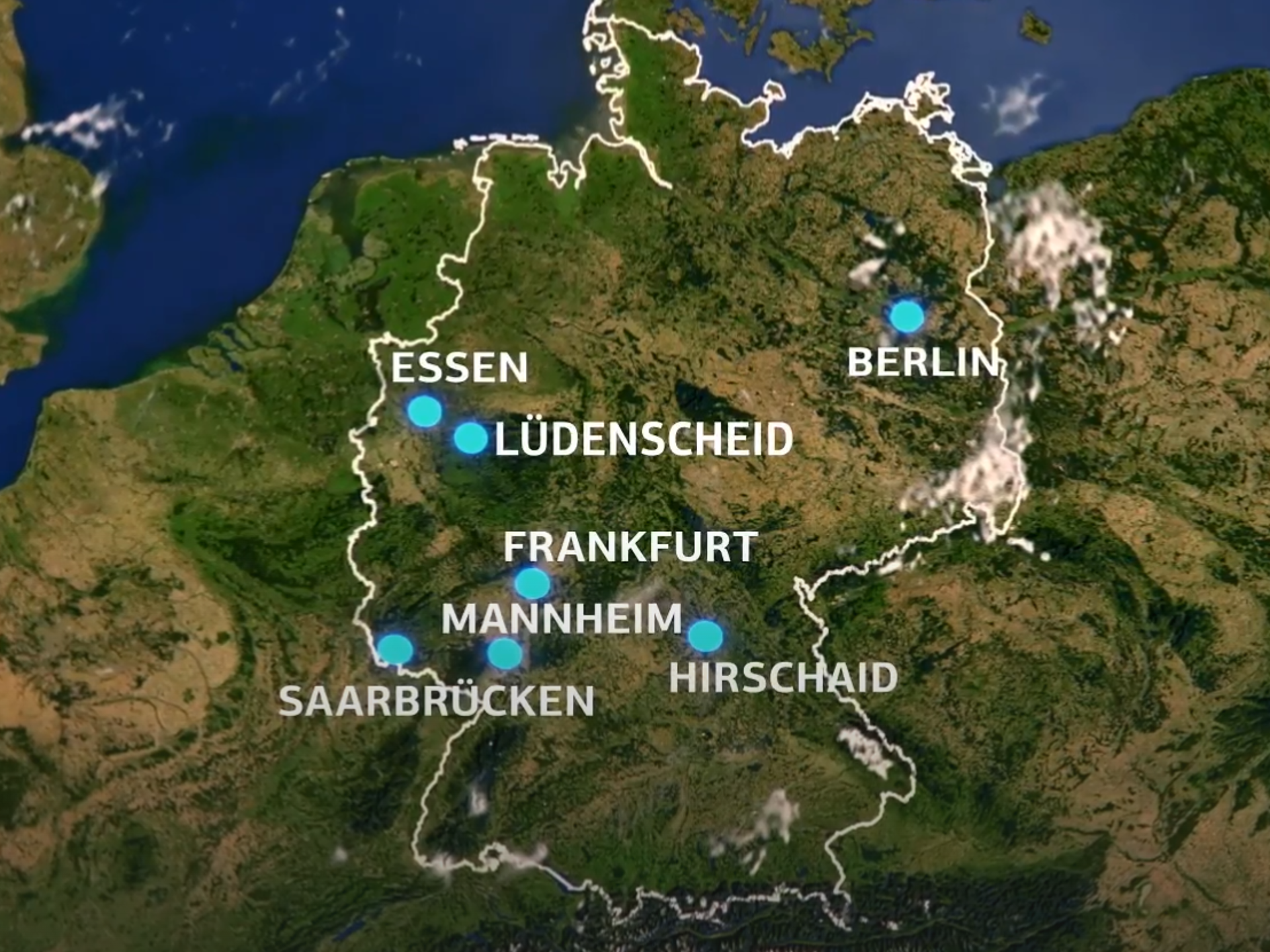
TUMO network Germany
With the opening of TUMO Frankfurt (early 2026), there will then be seven TUMO centres in Germany.
With TUMO, KfW is expanding its range of education funding and digitalisation services. Together with the Federal Ministry of Education, KfW has been promoting the important topic of education for many decades, among other things with its study and education loan and the Upgrading Training Assistance Act ( Aufstiegs-BAföG).
As Germany's largest promotional bank, KfW supports the TUMO Learning Centre to promote digital education for young people in Germany. In its diversity, it is the first extracurricular and free learning offer on digital topics in Germany.
Of course, it is not only young people who should benefit from the TUMO concept, but also the economy and society as a whole. This is why KfW's declared goal is to find additional partners beyond Berlin and thus promote a gradual development into a nationwide network of TUMO learning centres in Germany.
TUMO Centre in Mannheim
TUMO Mannheim
The second German TUMO Centre was successfully opened in Mannheim at the beginning of 2024.
Read moreFour years after Berlin, the second TUMO learning center for digital skills in Germany was established in Mannheim. KfW advised and supported the local project sponsor in the design phase.
TUMO centres in Hirschaid, Lüdenscheid, Essen and Saarbrücken
STEM
Science
Technology
Engineering
Mathematics
In 2025 alone, four new TUMO centres were opened in Germany: two in North Rhine-Westphalia and one each in Bavaria and Saarland.
TUMO Hirschaid
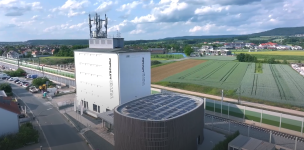
At the beginning of 2025, the first TUMO centre in a rural area was opened in Upper Franconia (Bavaria).
Read moreAt the beginning of 2025, TUMO Hirschaid near Bamberg (Bavaria) opened the first TUMO centre in a rural area. In a converted granary, digital creativity and STEM education come together here. The centre teaches the TUMO concept and expands on it with a diverse range of offerings in the areas of technology, design, and science projects: Through cooperation projects with other educational institutions, STEM initiatives, schools, universities, and industry, additional digital learning formats and, above all, scientific concepts are to be developed. The focus is on forward-looking key technologies such as artificial intelligence, robotics, and aerospace.
TUMO Lüdenscheid
In May 2025, the second TUMO centre in a rural area was opened in South Westphalia.
Read moreThe new TUMO Lüdenscheid was built on approximately 700 square meters in the heart of downtown Lüdenscheid (North Rhine-Westphalia). The center is located in a shopping mall and offers a modern, open-plan design that facilitates both individual learning and collaborative workshops. Young people from the region have access to innovative educational opportunities in the fields of technology, digital media, and creative design. Supported by local companies and educational partners, they can gain practical experience and develop their skills in real-world projects. Regular events and collaborative projects promote exchange and networking within the community, thereby strengthening the region's innovative power.
In addition to the TUMO centre in Lüdenscheid, so-called TUMO boxes are to be set up in three neighboring municipalities around the city. TUMO boxes are satellites to a TUMO centre, where part of the curriculum, the self-study phase, is offered - the young people then only have to travel to TUMO Lüdenscheid every two to three months for the workshops. The TUMO boxes will thus enable even more young people in rural areas to be reached close to their homes. The first TUMO box is in Halver and was opened at the end of November.
TUMO Essen | Ruhr region
The first TUMO centre in the Ruhr region opened at the beginning of September 2025.
Read moreAlso at the beginning of September 2025, TUMO Essen | Ruhrgebiet opened its doors in a former musical theatre in the city centre. Its central location makes the centre particularly easy to reach and creates synergies with Essen's cultural and educational landscape. The centre initially offers space for almost 250 young people per week and will be expanded to over 700 places in the future.
TUMO Saar
The first TUMO centre in Saarland opened at the beginning of September 2025.
Read moreAt around the same time, TUMO Saar was also launched at the House of Knowledge in Saarbrücken. Spread over several floors, the centre offers laboratories for robotics, programming and 3D printing, as well as modern learning rooms. Through collaborations with Saarland University and regional schools, young people can also discover current research topics here and put them into practice in hands-on projects. TUMO boxes are also planned around TUMO Saar in order to reach young people in the Saarbrücken area.
TUMO Frankfurt
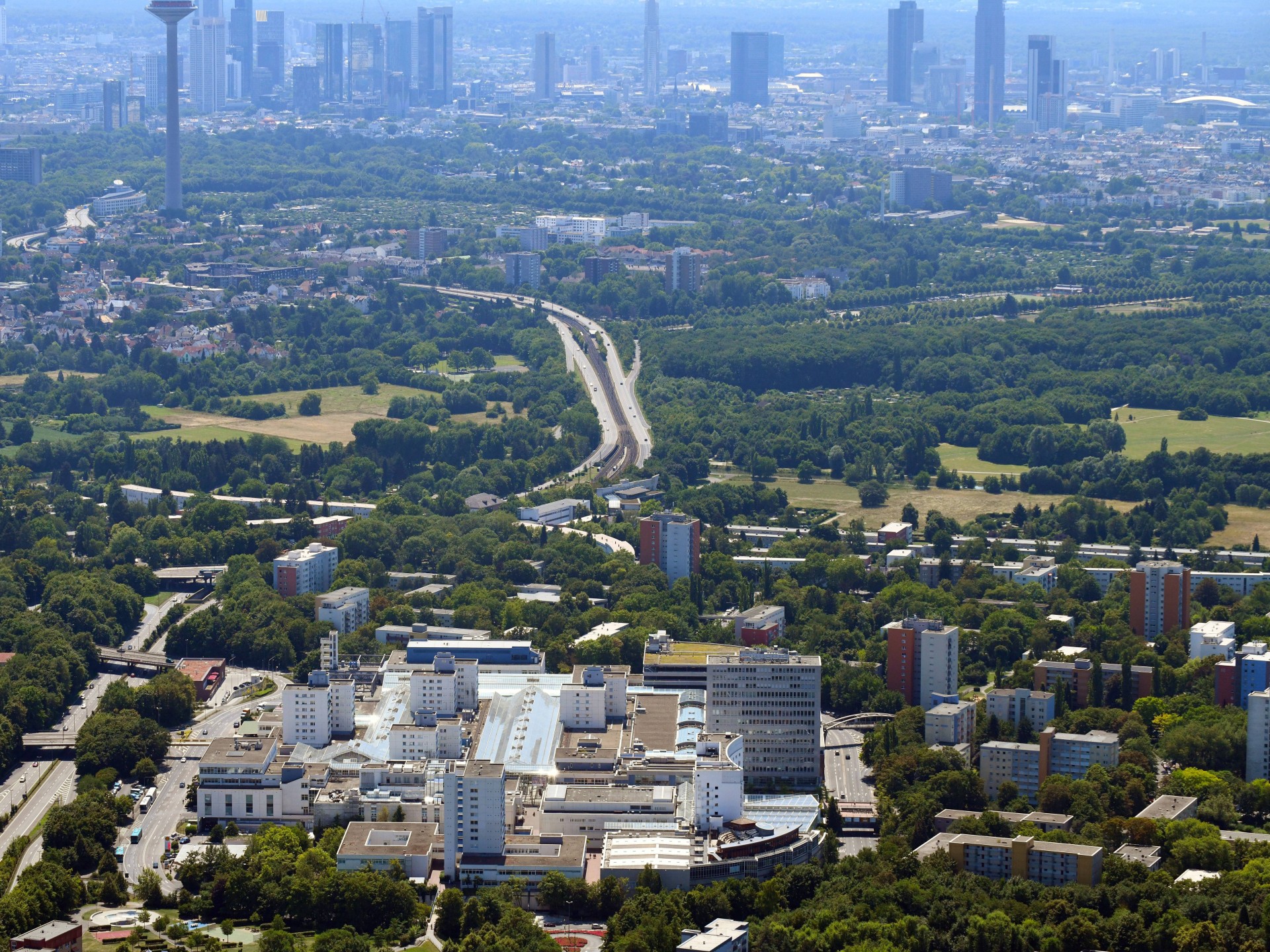
Within sight of the Main metropolis
TUMO Frankfurt has found a very accessible location in north-west Frankfurt, in a former bookshop within the NordWestZentrum shopping centre. From 2026, interested young people will be able to access digital learning opportunities on two floors.
TUMO Frankfurt
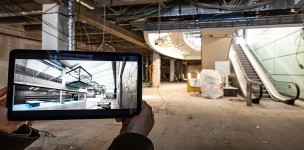
Shoulder view of the TUMO construction site in Frankfurt
The operator of the Frankfurt TUMO Centre is VHS Frankfurt, which will support the learning centre as a third-party funded project.
Read moreThe opening of the first TUMO learning center in Hesse is scheduled for May 2026 in Frankfurt. In a former bookstore in Frankfurt’s NordWestZentrum, young people will have access to a wide range of free educational programs across 2,000 square meters.
Published on KfW Stories on 23 October 2025, updated on 13 April 2026.
The described project contributes to the following United Nationsʼ Sustainable Development Goals
Goal 4: Quality education
Refusing people access to education means depriving them of a basic human right – and of important development prospects for individuals and society. Education enables people to improve their political, social, cultural, and economic situations. Worldwide, 58 million children and 63 million young people still do not have access to primary and secondary schools. 90 per cent of all children with a disability never go to school. 781 million people are illiterate. 7.5 million people with functional illiteracy live in Germany alone.
All United Nations member states adopted the 2030 Agenda in 2015. At its heart is a list of 17 goals for sustainable development, known as the Sustainable Development Goals (SDGs). Our world should become a place where people are able to live in peace with each other in ways that are ecologically compatible, socially just, and economically effective.
Data protection principles
If you click on one of the following icons, your data will be sent to the corresponding social network.
Privacy information