
Press Release from 2026-10-12 / KfW Research
New KfW study four weeks ahead of UN Climate Summit: Germany needs to invest six trillion euros to become climate-neutral
- Businesses, government and households need to raise EUR 290 billion each year for the climate transformation by 2045
- Investment in climate action also has economic benefits and provides opportunities for the German economy in climate technologies
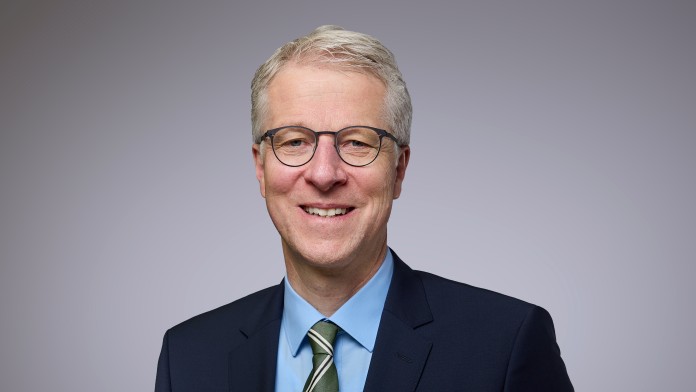
- KfW CEO Stefan Wintels: “Ambitious but manageable challenge”
- KfW continues to be a driving force in climate action and will be at the UN Climate Summit again in November
Four weeks ahead of the start of the UN Climate Summit, KfW has presented new figures on Germany’s investment needs for climate action. According to calculations made by Prognos on behalf of KfW, Germany must invest six trillion euros to reach the goal of climate neutrality by 2045. That is EUR 290 billion a year. Most of this, 45 per cent, will need to be invested in the transport sector, followed by energy (25 per cent), buildings (22 per cent) and industry (eight per cent).
Germany is facing ambitious but manageable challenges in transitioning to a climate-neutral society
, said Stefan Wintels, Chief Executive Officer of KfW, at the presentation of the study to journalists. Investing six trillion euros by 2045 is an enormous effort. But this sum falls into perspective when we consider that Germany would also need to invest heavily if it stuck with fossil technologies. Besides, investing in climate action provides economic benefits and reduces the rising costs caused by climate change. At the same time, climate technologies provide great opportunities for the German economy.
Germany is the second largest exporter of climate technologies. The market is growing fast, and German businesses can benefit from this growth. Transitioning to climate-friendly technologies is also likely to lower energy costs, with positive effects for businesses and households. Conversely, climate change poses great economic risks. For example, the 2026 heatwave significantly reduced Germany’s economic output. The financial losses caused by extreme weather events in Germany in the past five years have been estimated at more than 50 billion euros.
In the predecessor study from the year 2021, Prognos had identified an investment need of five trillion euros on behalf of KfW. The increase is a result of price increases of recent years and the ongoing investment backlog.
In the years 2018 to 2023, the private sector, households and the state invested 110 billion euros on average in climate action each year. If investment continues at this level, there will be a gap of around 180 billion euros each year to achieve climate neutrality by 2045.
The high investment volume falls into perspective since investment in fossil technologies would need to continue as well. If we look at only the additional investment compared with a conventional (fossil) reference technology, an additional 65 billion euros will need to be mobilised each year. That is less than two per cent of Germany’s GDP – an ambitious but achievable task, according to the study.
Nearly half the investment requirements, just under three trillion euros, or around 140 billion euros each year, would need to come from private and public-sector businesses, with large enterprises and SMEs needing to carry similar burdens. That means businesses would need to significantly step up their transition efforts. They spent 80 billion euros on climate action in 2024.
There is a massive need for action for businesses in the energy sector in particular, which need to invest some 1.3 trillion euros. The focus here is on extensive investment in energy infrastructure such as electricity grids and district heating networks, as well as in extensive renewable energy facilities. In industry, the focus is on the technical conversion of energy-intensive processes, for example the conversion of steel production to hydrogen-based processes and the electrification of process heat. Households are called upon mainly to modernise dwellings, and they also need to transition away from combustion engine to electric vehicles.
In total, just under twelve per cent of the investment required, or 33 billion euros, will have to be made by the public sector and 257 billion euros by private actors each year. The state needs to invest particularly in energy and transport. This includes, for example, investing in electricity distribution networks and district heating, rail infrastructure and the expansion of charging infrastructure for electric vehicles.
KfW stands ready to support businesses, individuals and the public sector in implementing climate projects,
said KfW CEO Stefan Wintels. But what is also clear is that the transition to climate neutrality cannot succeed without mobilising private capital. With the Germany Fund, KfW has joined forces with the Federal Government to make capital available for climate transformation projects and stimulating private investment.
KfW remains a driving force in climate action. It will again be represented at the UN Climate Summit COP31 in Antalya in November this year. KfW has committed around 415 billion euros in environmental and climate finance since 2017. It will engage with partner countries and international organisations at the summit to enable market access for German and European businesses. At the same time, it is committed to further advancing the protection of global goods such as the climate and nature conservation.
The study on the investment required to achieve climate neutrality is available at Focus on Economics | KfW.
Further information about KfW’s engagement at the UN Climate Summit COP at: KfW at COP31 in Antalya | KfW.
Information on the Germany Fund is available here: The Germany Fund: Private-sector investment for Germany’s future | KfW.
Share page
To share the current page content with your network, click the button below and then select the desired option in the dialog box.
Note on data protection: By clicking the button, your browser's sharing function is used. If you select an external provider when sharing, personal data may be processed by the provider. Please read our data protection principles for more information.
Your browser does not support sharing with external services.
Alternatively, you can also copy the short link: https://www.kfw.de/s/enkBbm2w.Dd9A
Copy link Link copied