
KfW Capital
Combining capital with innovation for “digital independence”
This recommendation was very helpful: responding to phishing campaigns directly targeted at messenger services and politicians, Julia Klöckner, President of the German Bundestag, in the spring of this year directed an urgent appeal to the members of Parliament. In it she encouraged delegates to use the Wire service. The appeal generated a veritable surge in demand for the young technology firm Wire, as well as producing a resounding media response.
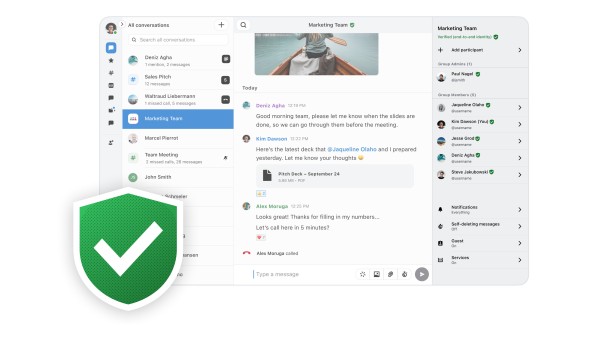
An overview of Wire’s digital workspace
Enables independent, secure communication in both private and public sector, and serves as an alternative to commercial platforms.
“The recommendation of President of the German Bundestag Julia Klöckner to use the messenger service of Wire has generated even greater interest in our services among politicians. The Bundestag was already familiar with us, but now we have even more contacts among delegates. The administration of the German Bundestag makes Wire available as an alternative to commercial platforms such as WhatsApp or Signal,” said Benjamin Schilz, Chief Executive Officer (CEO) of Wire. The company is benefiting from high demand for secure communication in the private and public sector.
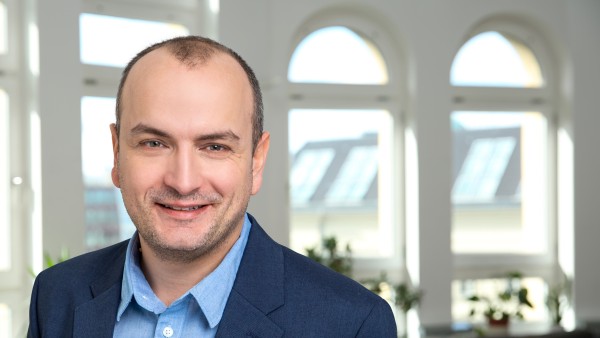
Benjamin Schilz
Chief Executive Officer of Wire
Wire is an example that deep tech “Made in Germany” can work and that the necessary finance can be raised to enable the company to grow. “The discussion around greater digital sovereignty and independence in cyber security is helping us not just in Germany and Europe. Organisations and corporations in the Middle East, too, want to become more independent from the dominant US tech firms,” said Schilz.
In order to achieve this independence, growth capital will have to play a much larger role. While the US allocates 0.8 per cent of its gross domestic product (GDP) to venture and growth, in Germany it is a mere 0.15 per cent. The result is a financing gap of 30 billion euros a year, as published by the “German Venture and Growth Forum” in its 2026 “Playbook”.
European solutions are doable and financeable
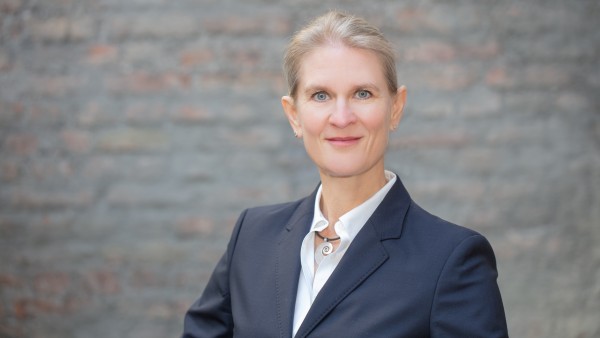
Diana Meyel
Managing Partner at Cipio Partners
The crucial factor for Wire’s success is the financial support it has received from Cipio Partners. The investor provides growth capital and played a crucial role in the most recent funding rounds. “We often come aboard as the last minority investor in order to guide firms to the profit zone and exit. That is a niche in which a lot of growth capital is needed and there is still a major shortage of growth capital,” said Diana Meyel, Managing Partner at Cipio Partners. Investments usually comprise equity of 5 to 15 million euros. But the trend is towards larger tickets. Cipio comes in where the proof of concept has already been completed. “We get on board when there is no more technology risk and there is real scalability,” explained Meyel. Cipio is after firms that grow at rates of 30 to 60 per cent, not necessarily 100 per cent. They may even have gone through a consolidation phase in which they did not have any growth at all. The investor wants firms that operate in B2B and are able to demonstrate a learning curve.
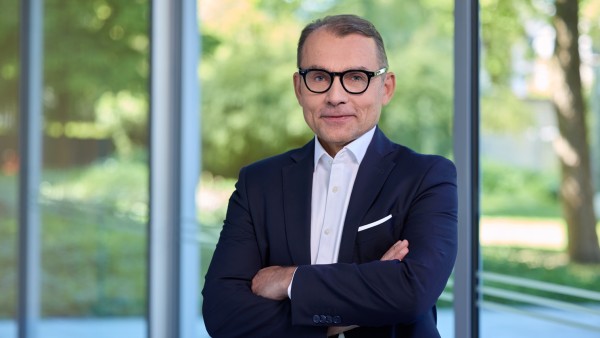
Dr Jörg Goschin
Chief Executive Officer of KfW Capital
Cipio itself received strong support with an investment from KfW Capital. “We are deliberately bolstering the growth of innovative technology firms in Europe by participating in Cipio Partners. We see the field of tech security in particular as a decisive lever for the digital sovereignty and competitiveness of our economic area. Security solutions that protect data, infrastructure and business processes are an anchor of confidence in digitalisation.
One example of this is the portfolio company Wire, which enables secure communication for businesses and organisations. Wire shows how modern tech security ‘Made in Europe’ protects sensitive information and makes digital cooperation more resilient. By investing in leading tech security firms such as Wire through Cipio Partners, we not only support technological excellence but contribute to making digital innovation secure, resilient and viable in the long term,” said Dr Jörg Goschin, Chief Executive Officer of KfW Capital.
Wire wants to remain independent
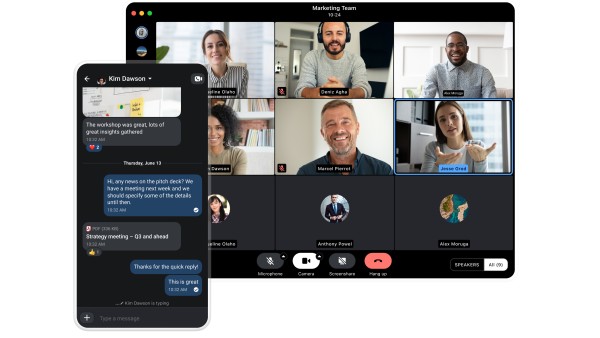
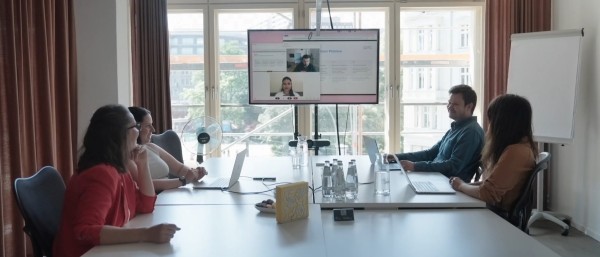
Secure online meeting with Wire
Supports the growing demand for secure communication and strengthens digital sovereignty.
The tech firm currently has 140 employees – most of them in Germany. Wire doubled its turnover in 2025 and aims to surpass the break-even point at the end of 2027, according to Schilz. The current focus is on internationalisation. “In Europe, for example, we see strong growth in France and the UK, but also in the US, which at first may come as a surprise. Asia and the Middle East are other growth regions,” explained Schilz.
Part of the business model is that 95 per cent of the capital investors needed for growth come from Europe, and Wire wants to keep it that way, said Schilz. According to TechCrunch, there has lately been a C funding round for 24 million euros, and in terms of valuation Schilz believes that the firm will be a unicorn in two or three years. Unicorns are young businesses with a valuation of at least one billion euros. The Wire management has already received offers from multiple buyers but wants to remain independent. An IPO might be an option, possibly three years from now.
“The degree of maturity of Wire’s product and technology convinced us. To put it simply, it works well, and there are customers. And if you can even have the government as a customer, then clearly, you’re doing some things right,” said Meyel of Cipio Partners. The growth financier came on board in 2022, seeing Wire as a “conviction investment”. But there was no way to anticipate that the issue of “digital sovereignty” would one day become so important. Cipio actively accompanies the investments. What does that mean? “Well, the founding team is important to take the firm into the region of, say, ten million euros. But you need completely different skills to get from ten million to 100 million. This takes processes, hierarchies and an organisation. You must try to keep the founders on board and attract external management at the same time. At Wire we succeeded in doing this,” said Meyel.
Certifications provide a competitive advantage
Wire boss Schilz is not afraid of competitors from the US or the rise of artificial intelligence (AI). “AI companies might be able to produce a messenger within a few weeks. But what really matters are certifications. These processes take years, which is why we believe we are ahead,” said top manager Schilz. “The BSI certification is very important for us, and it is very similar to the security classification ‘NATO Confidential’, which is planned for next year. That was a multi-year process, and it provides a major lead on the competitors,” added Cipio manager Meyel. “My motivation is to move a European tech firm with a cool product forward,” said Schilz. He sees Europe as an attractive market even if it is fragmented into 27 languages and regulatory authorities. He believes the greatest challenge in the coming twelve months is to speed up the internationalisation. It is a tough job because, after all, you need to understand each of the local markets and their regulations. CEO Schilz knows: “Busy days lie ahead, that much is clear.”
Published on KfW Stories on 4 August 2026.

Data protection principles
If you click on one of the following icons, your data will be sent to the corresponding social network.
Privacy information