
KfW Capital
Capital for the golden opportunities from innovation and growth
The German and European economies are in the midst of a profound transformation. Artificial intelligence (AI) is comparable to the triumph of the Internet, energy security is being redefined, geopolitical threats require a rethink of security policy. Many billions of euros will need to be mobilised in the decades ahead. Now, venture capital is being invested in deep tech and the growth of start-ups with the support of KfW Capital.
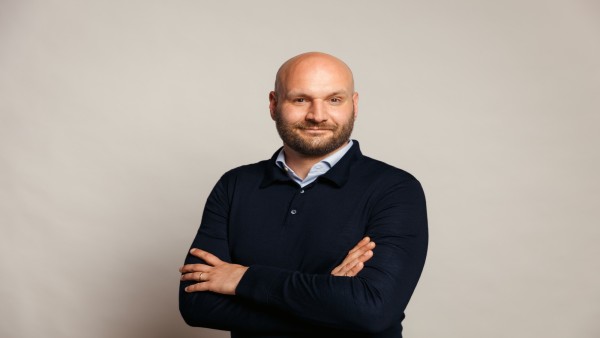
Christian Miele
General Partner at the Berlin-based venture-capital investor Headline
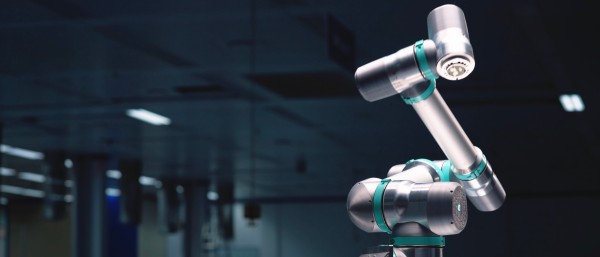
For Christian Miele, General Partner at the Berlin-based venture-capital investor Headline, venture capital funds are about to enter a golden era. He refuses to subscribe to the widespread pessimism in society but mainly sees the future as offering great opportunities. “At the moment, the deal flow is extremely good – especially in terms of AI and deep tech – and the entrepreneurs are of outstanding quality. There is a bit of a gold rush atmosphere in a positive sense, since young technology firms are also growing fast, too. Our portfolio includes, for example, the AI company Mistral as well as Robco, a company that provides robotic automation solutions,” says Miele.
Artificial intelligence will become indispensable in the future
He adds that among the investments of the past 24 months, every single company would in fact also have had contact or applications with AI, for example in areas such as healthcare, software in the B2B sector, energy and camera technologies. “I am an ardent supporter of linking traditional industry with AI, which I refer to as ‘physical AI’. I see this as a gigantic opportunity for German entrepreneurs. They can harness new opportunities in their natural habitat. In the coming years, there will be no alternative to physical AI because the demographic development is forcing us to replace labour as a production factor with AI and robotics,” Miele believes. Headline acquires only minority shareholdings and gives young technology firms equity of one million to around 70 million euros. Globally, Headline today has USD 4.5 billion under management, which Miele believes could grow to USD 10 billion by as early as 2030.
There is still work to be done in terms of capital provision
He sees Headline as a sector-agnostic investor.
“Companies from fintech, software and consumer apps are of interest to us, as are AI, defence, aerospace and robotics,” explains Miele, who has gathered much experience with policymakers in the Bundesverband Deutsche Startups (German Startups Association) and continues to see a need for action. In its new book “Das neue Kapital” (The new Capital), the German Private Equity and Venture Capital Association BVK states that almost USD 173 billion went into US start-ups in 2024, more than four times as much as in Germany relative to economic power.
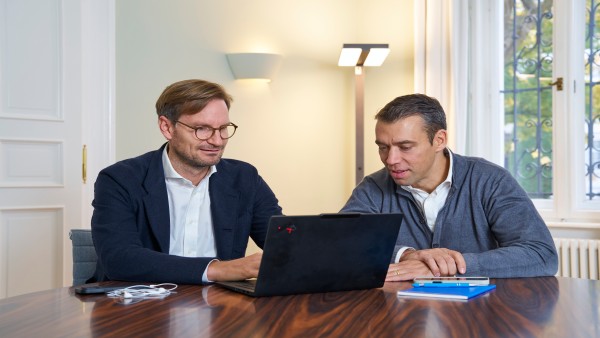
Florian Tappeiner and Christian Figge
Both Managing Partners at Armira
The fund Armira Growth I focuses on growth finance because many start-ups and SMEs need capital to finance their further expansion or the acquisition of firms. “We are looking for the next generation of hidden champions, young technology firms that have the potential to become global market leaders. We see ourselves as a partner of these tech firms and offer capital and expertise for the next growth phase,” says Managing Partner Florian Tappeiner.
The Armira movers look at more than 2,000 businesses each year and try to identify, get to know and build good relationships with the most exciting ones. They usually follow the firms’ development for many years. “But we are very selective in choosing where to invest. We perform an in-depth analysis of around a dozen firms, at the end of which are typically two or three new investments per year,” says Christian Figge, another Managing Partner at Armira.
Investors are unsettled by high valuations for deep tech companies
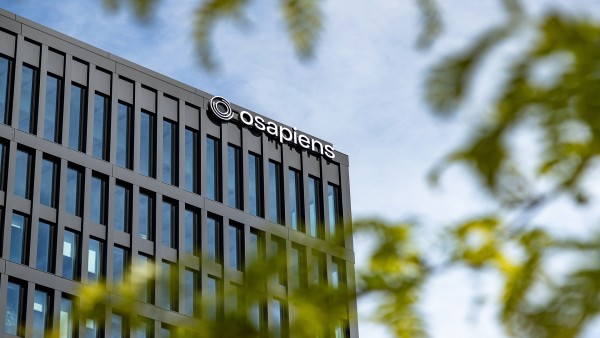
Osapiens
The headquarters of the Mannheim-based software firm and a portfolio company of Armira.
As a concrete example, he manager Tappeiner mentions the Mannheim-based software firm Osapiens, which Armira financed with EUR 25 million. It offers software-as-a-service solutions for the digitalisation of supply chains and is growing very fast. The company is now a market leader in Europe, has 500 employees and more than 2,000 customers at home and abroad. The Armira managers currently see cleantech, mobility, industrial automation and health tech as the most exciting fields in Europe today. Figge believes AI applications in the SME sector will offer some of the greatest opportunities in the coming 18 months.
For him, a good example is Partspace of Deggendorf, whose AI-supported procurement software enables the German engineering industry to save millions of euros. Many industrial firms have taken steps and invested here massively. At the same time, Figge is concerned about the very high valuations of some AI and defence companies which he says feels like a bubble, and bubbles are known to burst.
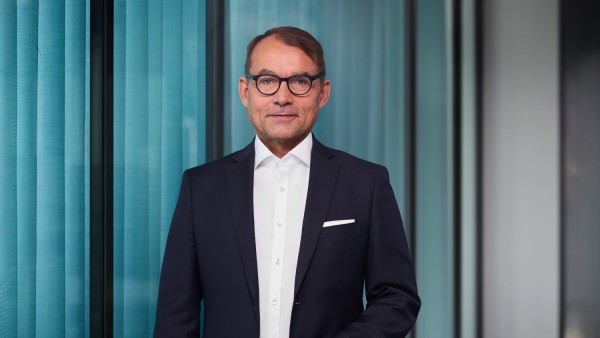
Dr Jörg Goschin
CEO of KfW Capital
KfW Capital has invested in Headline and Armira Growth because the goal of the 100% KfW subsidiary is to improve the funding situation of start-ups and innovative enterprises through financially strong venture capital funds. Having entered the market in October 2018, KfW Capital is already invested in almost 150 VC funds with a volume of some EUR 2.8 billion. The funds commit to financing start-ups in Germany at least with this capital.
Overall, KfW Capital has so far reached more than 2,800 start-ups. “Deep tech and AI are two very attractive investment areas that are evolving fast. Funds such as Headline and Armira are important for sustainably securing competitiveness particularly in the very important growth phase, and their strength exemplifies the high quality of today’s German VC ecosystem,” says Dr Jörg Goschin, CEO of KfW Capital.
KfW Capital is a sparring partner for venture capital funds
Armira’s business model also shapes the overall profile of the fund investors. Armira’s deep roots in the SME sector is reflected in the investor base. Only entrepreneurs and entrepreneur families are invested in Armira besides KfW Capital and the Growth Fund, according to Tappeiner. “KfW Capital is a good sparring partner for us. The appraisal process is like a baptism of fire, but when it’s over it’s also easier to get further investors on board,” says Figge of Armira.
Published on KfW Stories on 4 December 2025.

Data protection principles
If you click on one of the following icons, your data will be sent to the corresponding social network.
Privacy information