
Tip: Activate javascript to be able to use all functions of our website
Tip: Activate javascript to be able to use all functions of our website
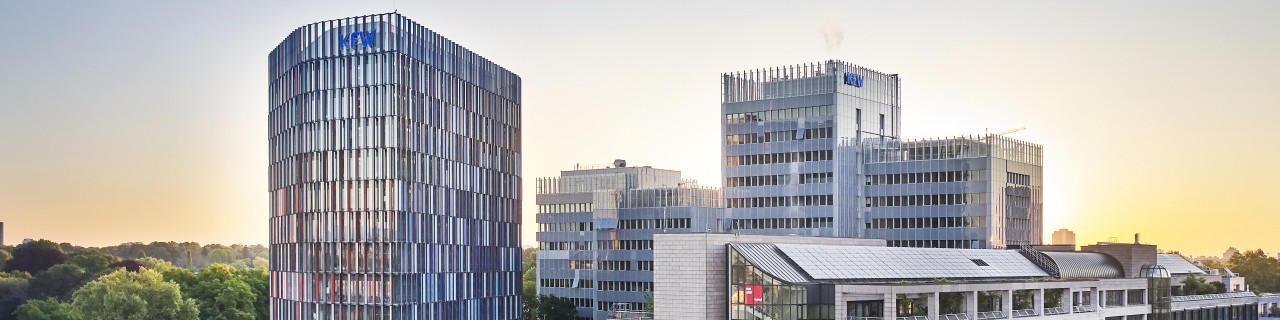
Climate action is not an abstract goal for KfW: we are reducing our environmental footprint step by step – measurably and transparently. Find out what concrete measures we are implementing at our sites to achieve this goal.
KfW operates three sites in Germany: in Berlin, Bonn and Frankfurt. Despite differing underlying conditions, all three pursue a common goal: to reduce CO₂ emissions in their own operations as much as possible by 2030, leaving only unavoidable emissions, such as those from portions of green electricity or district heating. This not only strengthens the future viability of KfW’s sites, it also makes a tangible contribution to achieving the German Federal Government’s climate targets.
As part of a comprehensive transformation project, fossil fuels will be gradually replaced, the procurement of district heating and electricity from renewable sources will be expanded, and photovoltaic systems will be installed on suitable roof areas.
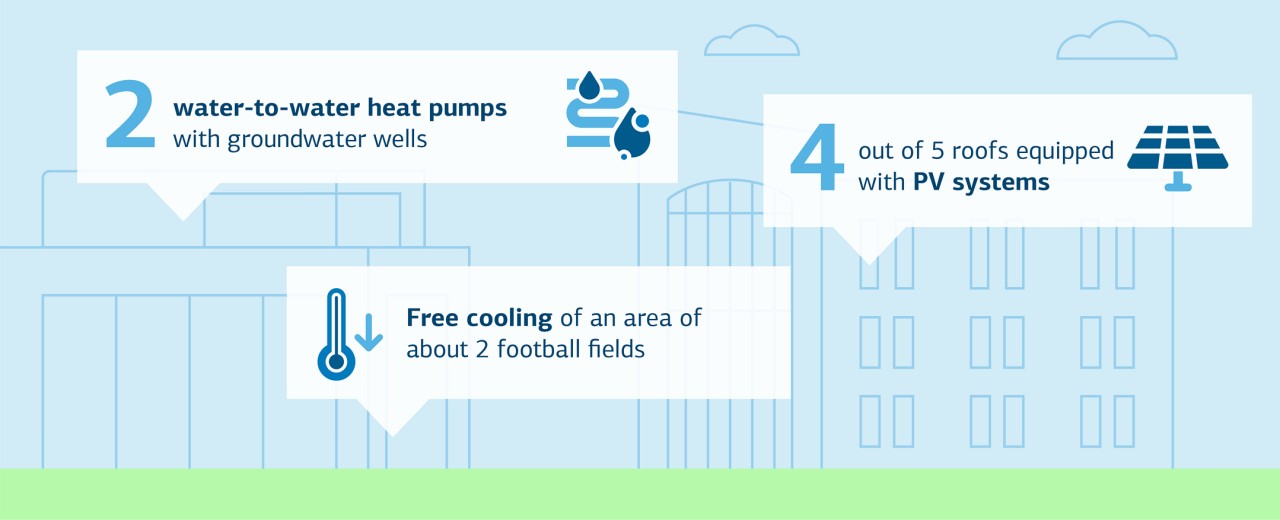

"In Bonn, we set ourselves the target of connecting five buildings in an energy-efficient way, merging the heating and cooling systems and significantly expanding photovoltaic capacity. We installed two water-to-water heat pumps, which are supplied from two groundwater wells. These wells act as a source of energy, while also allowing free cooling. To cover peak loads in the heating supply, we also rely on power-to-heat systems. We have also been able to install photovoltaic systems on four out of five roofs. Despite one roof that could not be used, we are achieving a peak output of over 460 kilowatts peak by using more efficient modules. Since 2024, continuous energy monitoring has been in place, which has already revealed optimisation potential that we have been able to implement successfully."
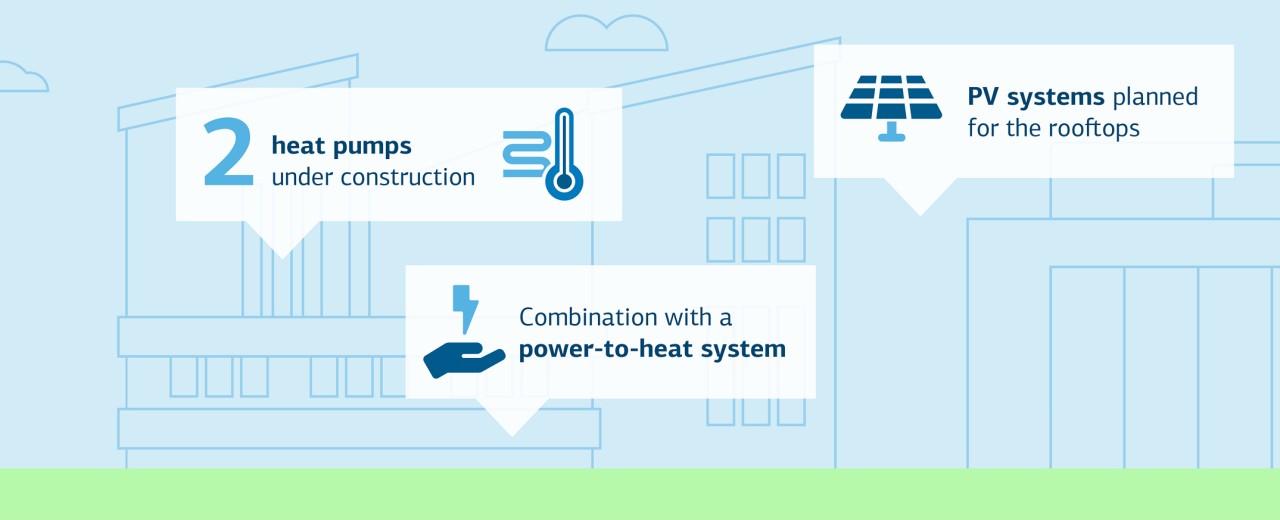
"In Berlin, we had to redesign the originally planned large-scale heat pump due to technical and structural problems. We are now using two smaller heat pumps, which we expect to be able to start using for heating for the first time in 2026/27. Combined with a power-to-heat system, which will be put into operation later, we will enable a heat supply completely free of CO2 emissions within the site. At the same time, we will start installing classic photovoltaic modules on suitable areas of new buildings and flat roofs in 2026. The use of solar roof tiles was originally planned for our listed buildings. However, as there are currently no suitable products available that meet the heritage conservation requirements, we are now also using conventional photovoltaic modules here. As you can see, the project is constantly presenting new challenges, which we solve constructively and creatively. That’s what makes this work so exciting."
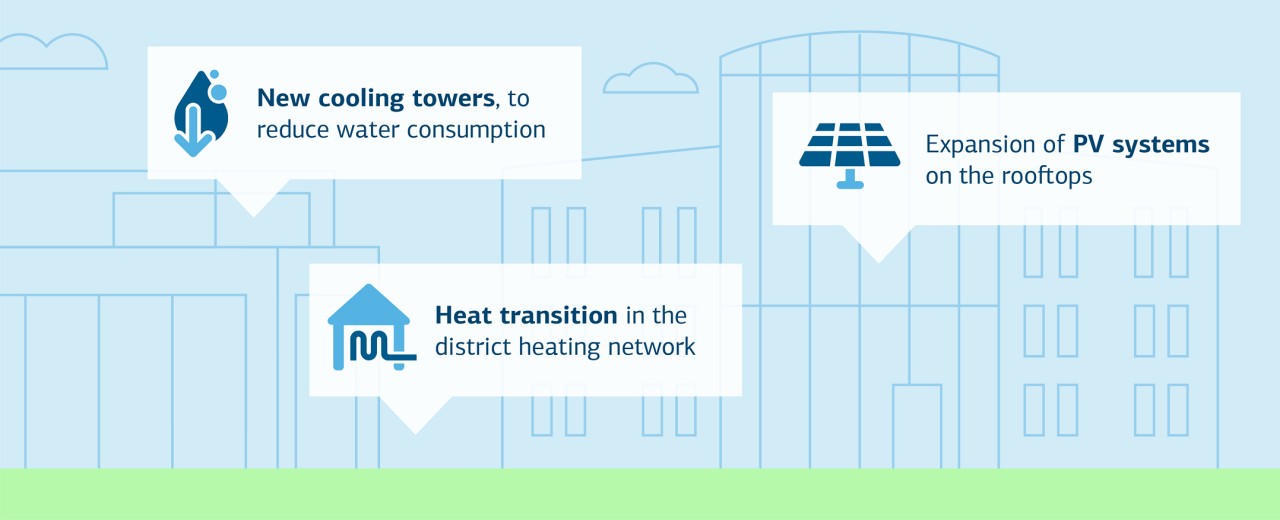
"In Frankfurt, we are focusing on three actions: firstly, the cooling towers on the Northern Arcade are being replaced. We want to switch to a technology that minimises water consumption and the associated chemical treatment of water. Secondly, we are striving for maximum expansion of photovoltaic areas. However, not all roof areas can be used due to structural limitations. The expansion is expected to be completed by 2027. Thirdly, we are developing our energy supply concept further. Our target is therefore to be completely free of fossil fuels from 2030 onwards. Adding heat pumps into the mix means the exhaust heat from the cooling system is used almost in its entirety. Air-to-water heat pumps are also used. We cover peaks in demand with district heating. In order to achieve consistent decarbonisation, classic heat generators such as gas and pellet boilers are being dismantled as construction work progresses."

KfW is also pursuing the goal of reducing emissions in the area of mobility. Since 2023, we have been purchasing exclusively all-electric vehicles for our fleet. As a result, with the exception of two leased vehicles, the fleet has been fully electric since the end of 2025. The charging infrastructure consists of a total of around 130 charging points, including fast chargers. Employees can also charge their private vehicles for a fee – an offer that many take us up on. There are no plans for further expansion just yet, as the existing infrastructure has already been extensively expanded and sized according to needs.


Share page
To share the current page content with your network, click the button below and then select the desired option in the dialog box.
Note on data protection: By clicking the button, your browser's sharing function is used. If you select an external provider when sharing, personal data may be processed by the provider. Please read our data protection principles for more information.
Your browser does not support sharing with external services.
Alternatively, you can also copy the short link: https://www.kfw.de/s/ennB_JtJ
Copy link Link copied