
Tip: Activate javascript to be able to use all functions of our website
Tip: Activate javascript to be able to use all functions of our website
Briefing
How KfW Supports Renewable Energy AbroadReducing CO₂ emissions and reliably ensuring sufficient energy supply, both worldwide and in Germany: this can only be achieved through the development and promotion of innovative solutions and more intensive international cooperation. This benefits both the partner countries as well as the German and European economies. Renewable energies are considered a future market – technological possibilities are constantly improving, demand is growing, and costs are decreasing.
To accelerate the expansion of renewable energies on a global scale, KfW specifically finances future technologies. These include, for example, green hydrogen, photovoltaics, solar thermal energy, and onshore and offshore wind projects. In doing so, KfW always keeps in mind the interests of developing and emerging countries and their participation in tapping the potential of renewable energies.
To meet the globally growing energy demand with climate-friendly sources, the possibilities for producing and using renewable energies must be fully exploited. Natural energy sources such as sunlight, wind, water, waves, biomass, and geothermal energy offer enormous potential where available, especially in developing and emerging countries.
In 2025, KfW’s climate and environmental commitments – through its banking subsidiaries KfW IPEX-Bank and DEG and its Development Bank division – amounted to around EUR 14 billion (2024: EUR 12.6 billion). This represents just under 40 per cent of its commitments.
Between 2021 and 2025, total commitments for climate and environmental protection financing amounted to around EUR 56 billion. (As of April 2026)
Energy that is saved — i.e., not consumed in the first place — is the most climate-friendly form of energy. Savings and efficiency therefore reduce costs and greenhouse gas emissions. In mobility, buildings, industry, and public services, the potential for savings is significant in partner countries.
Therefore, alongside investments in more efficient power systems in several partner countries, KfW supports a wide range of efficiency initiatives. KfW provides, for example, funding to enable municipalities, companies, and public utilities to invest in environmental measures. These projects increase energy efficiency, improve living comfort, and substantially extend the life cycle of buildings.
The global investment need for expanding the hydrogen economy is very high and is estimated to exceed EUR 2 trillion by 2050.
KfW offers targeted and interlinked financing products to promote projects along the entire value chain of green hydrogen: from production through transport and storage to utilisation, including the necessary renewable energies.
Germany’s dependency on hydrogen imports (over 70% of total demand) creates an additional mandate to support German investments as well as the establishment of viable hydrogen partnerships.
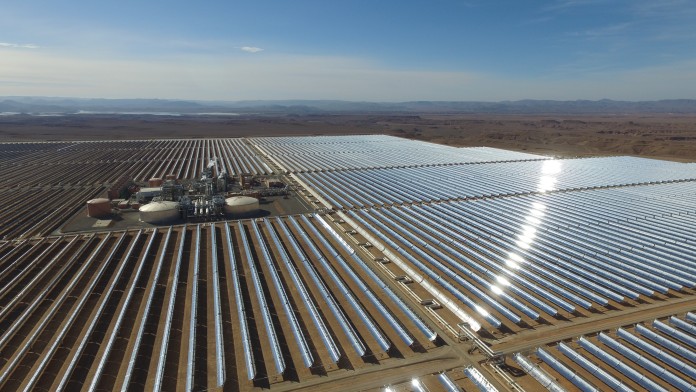
Morocco is harnessing solar power to free itself from fossil fuels. On an area of 3,000 hectares, one of the world’s largest solar complexes has been developed in recent years. International financiers such as KfW support the energy transition, with many German companies on board.
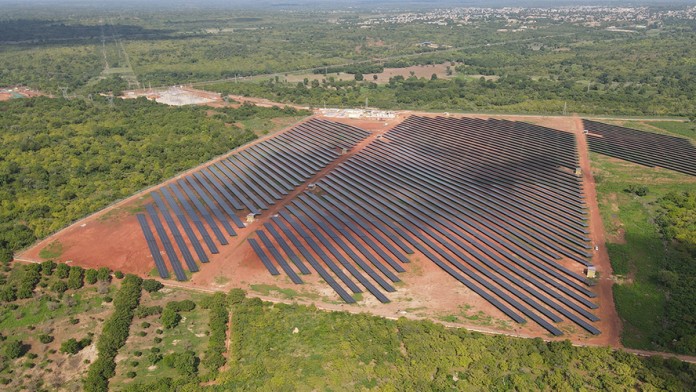
The solar power plant is a model project for expanding solar energy in Côte d’Ivoire. It is a key step towards increasing the share of renewable energies in the country’s electricity supply to 45% by 2030. The construction was carried out by a German-French consortium as general contractor. This project allows Côte d’Ivoire to benefit from European know-how, while simultaneously securing jobs in Germany and Europe.
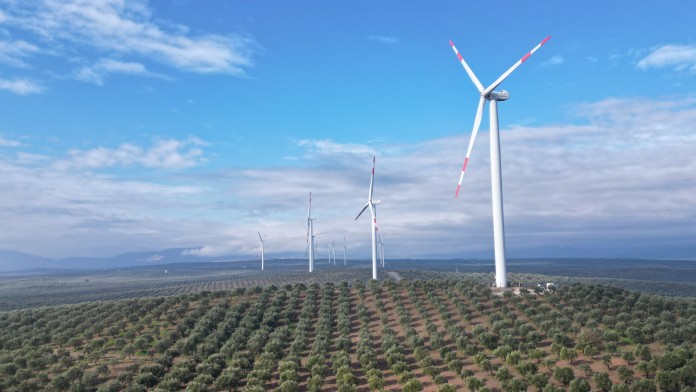
KfW subsidiaries DEG and KfW IPEX-Bank are involved in financing the onshore wind farm project “Enerjisa YEKA-2” in Turkey, which comprises nine wind farms with a total capacity of 750 MW. The supplier and installer of the 180 wind turbines is the German manufacturer Enercon. Financing of around USD 1 billion comes from a consortium of seven commercial banks and development institutions. KfW IPEX-Bank is participating with USD 125 million. DEG provides USD40 million as a long-term loan. Large parts of the financing are structured as a “Green Loan”.
Last update: May 2026
Share page
To share the current page content with your network, click the button below and then select the desired option in the dialog box.
Note on data protection: By clicking the button, your browser's sharing function is used. If you select an external provider when sharing, personal data may be processed by the provider. Please read our data protection principles for more information.
Your browser does not support sharing with external services.
Alternatively, you can also copy the short link: https://www.kfw.de/s/enkB_tQy
Copy link Link copied