
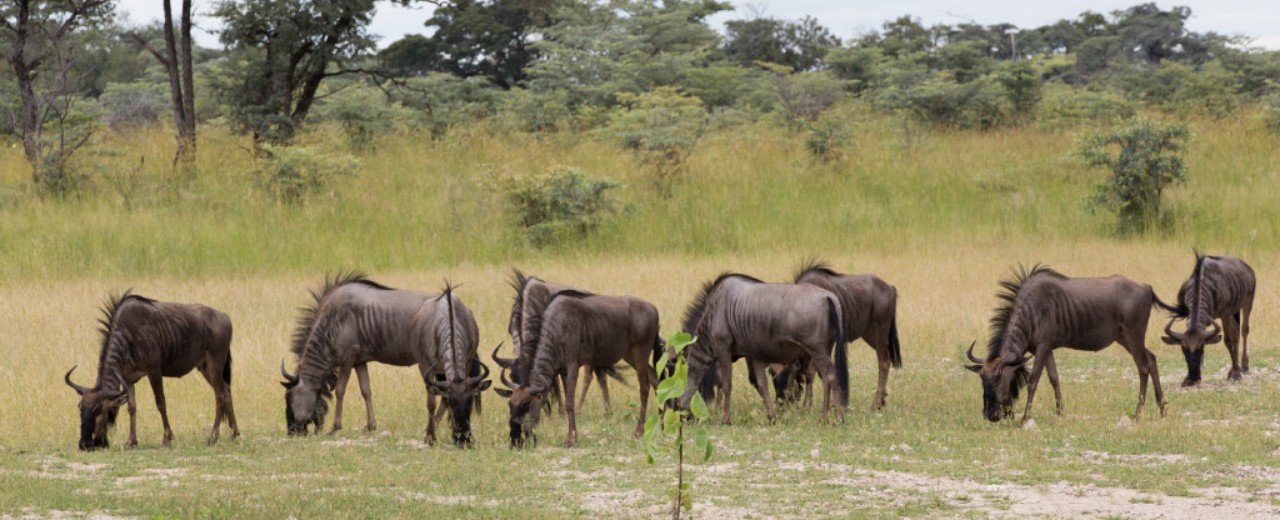
How KfW works to nurture biodiversity all over the world
Diverse financial instruments to combat the loss of species and ecosystems
The loss of biodiversity and the threat to ecosystems worldwide have direct negative consequences for people, nature and the climate – in developing and emerging countries, but also in Germany.
KfW is strongly committed to the conservation of biodiversity. It is one of the main international donors for biodiversity. In total, it currently provides EUR 4.5 billion for biodiversity.
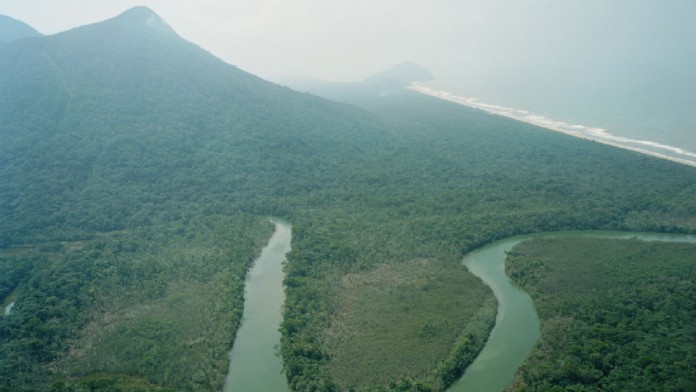
As a bank committed to responsibility, KfW promotes forest conservation, nature conservation areas as well as marine and coastal protection, among other things. In total, it contributes to the protection of more than 800 areas in around 70 countries, with a total area of about 2 million square kilometres – an area more than five times larger than Germany.
Because nature conservation projects alone are not enough to combat the biodiversity crisis, the integration of biodiversity-promoting approaches in other sectors – such as sustainable water supply and sanitation management – is playing an increasingly important role in KfW projects.
International cooperation
KfW works with partner countries, large nature conservation organisations and non-governmental organisations to preserve biodiversity. There is a diverse product portfolio as well as strategic partnerships, such as with the World Wide Fund For Nature (WWF), the World Nature Conservation Organisation IUCN and the Senckenberg Society for Nature Research, for example.
KfW and its partners jointly pursue the goal of protecting and preserving natural habitats as extensively as possible. Taking into account the rights and needs of the local population, such as indigenous peoples, is a key means and a central objective.
Making an impact with a wide range of instruments
KfW contributes to the protection of biodiversity with various financing instruments. To this end, KfW analyses impact indicators specifically relating to biodiversity, such as the size of the areas protected by the partner countries.
KfW…
- advises German companies on sustainable investments in developing countries and emerging economies, including on the topic of biodiversity, for example, in infrastructure projects,
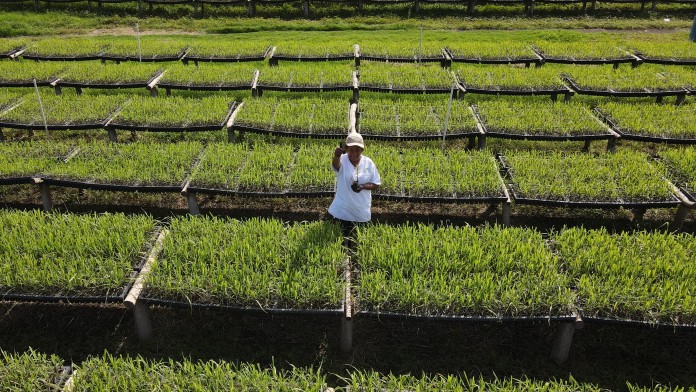
- finances and advises medium-sized agricultural companies in Latin America on resource-conserving production and the protection of biodiversity,
- operates globally, because wherever in the world the production of energy from renewable sources is expanded, energy efficiency is increased or investments are made in environmental protection measures this has a positive effect on the global climate and the environment,
- supports German and European companies in their transformation projects with medium- and long-term financing solutions,
- offers its customers various options for sustainable financing,
- finances development projects in the countries of the global south on behalf of the German Federal Government,
- implements about 60% of the funds for biodiversity from the German Ministry for Economic Cooperation and Development (BMZ).
Group-wide biodiversity project ‘bioSFer’
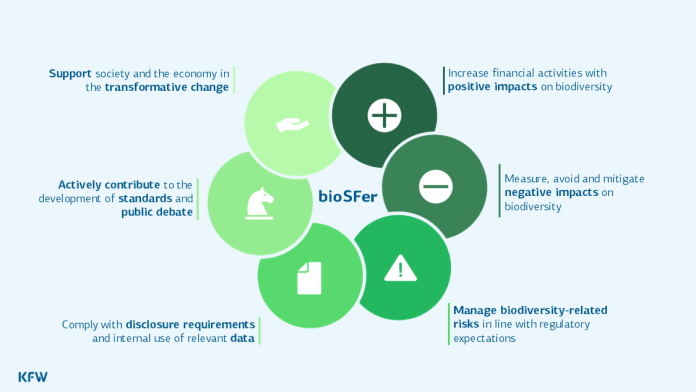
KfW has initiated the project ‘bioSFer – committed to Nature’. The name is based on the concept of the planetary boundary ‘Biosphere Integrity’, which refers to the critical state of ecosystems. The capital letters “SF” stand for the strategic positioning of the project in KfW Group's ‘Sustainable Finance Concept’.
The core element is the development of a biodiversity strategy for KfW Group. In this regard, bioSFer pursues a comprehensive approach. Among other things, positive effects are strengthened by expanding appropriate financing activities, negative effects are avoided, and biodiversity-related risks are managed in line with regulatory requirements.
Examples of projects
Further information
Status: 17 September 2025
Share page
To share the content of this page with your network, click on one of the icons below.
Note on data protection: When you share content, your personal data is transferred to the selected network.
Data protection
Alternatively, you can also copy the short link: https://www.kfw.de/s/enkB1WqK
Copy link Link copied