
Tip: Activate javascript to be able to use all functions of our website
Tip: Activate javascript to be able to use all functions of our website
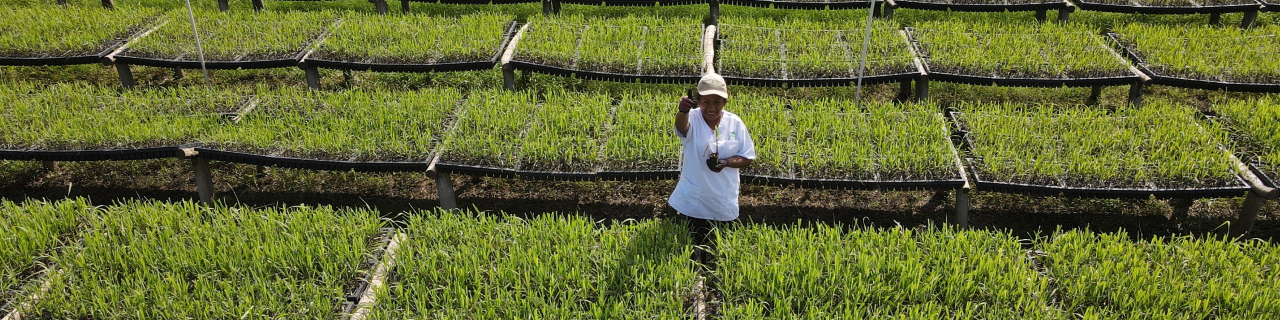
A sugar cane producer from Guatemala is committed to sustainable cultivation. It focuses on soil health, reducing the use of agrochemicals and taking a regenerative approach. The long-standing DEG financing customer was supported by the Business Support Services team of DEG subsidiary DEG Impulse.
In agriculture, soil fertility is a key factor – not only for stable yields, but also for climate protection and ecosystem resilience. Well-structured soils store large amounts of organic matter, bind carbon and secure long-term productivity. However, monocultures and the intensive use of chemical fertilisers are increasingly endangering these natural functions.
Ingenio Magdalena (Magdalena) S.A. farms around 52,000 hectares of sugar cane in Guatemala. In view of the ecological challenges, the company is implementing targeted measures to promote soil biology with the aim of increasing yields while simultaneously contributing to climate change mitigation.
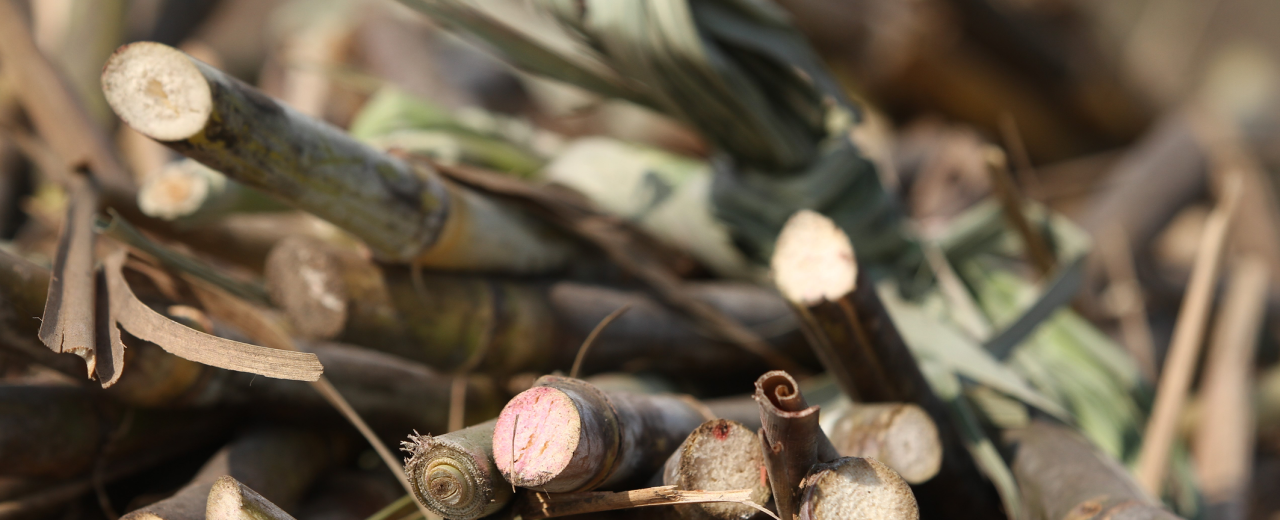
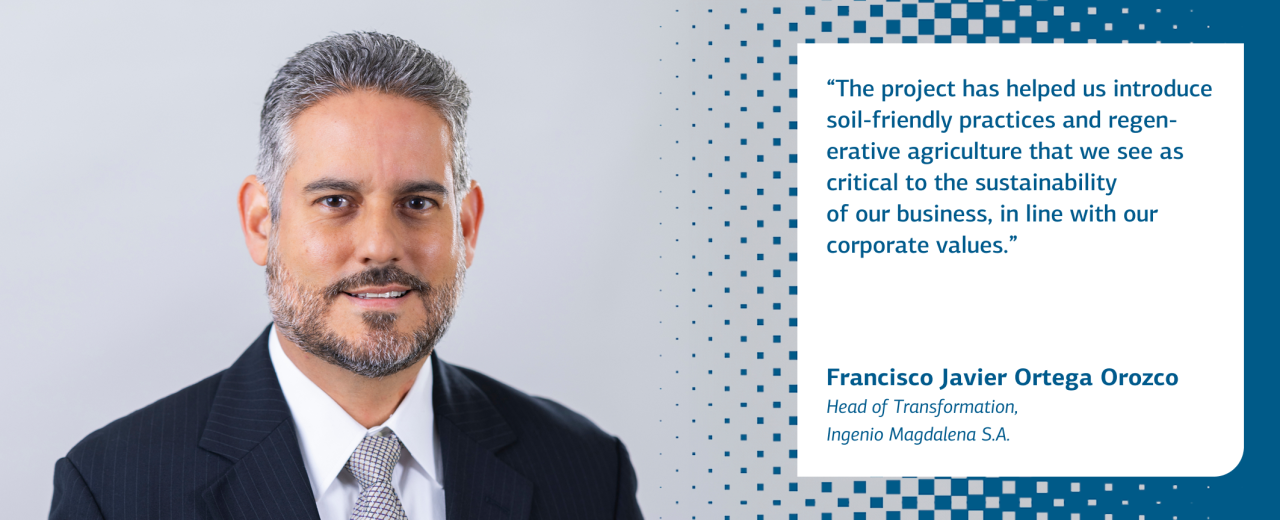
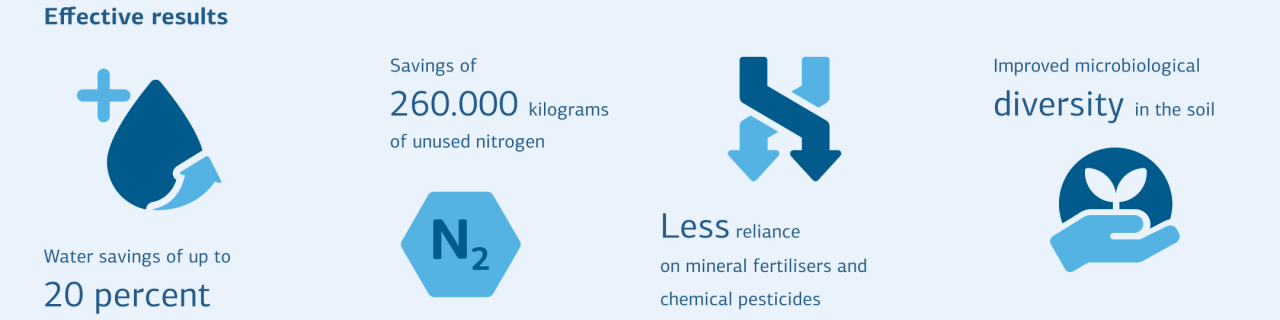
DEG Impulse supported the development of measures to improve soil health as part of its Business Support Services programme. “Magdalena’s soil health project was very extensive and diverse – it was about improving organic matter, increasing biodiversity, improving nutrient availability and reducing harmful organisms in the soil,” explains Anne Schneeweis, responsible project manager at DEG Impulse. A central element was the switch to green harvesting. While traditional sugar cane cultivation involves burning the fields before harvesting and then harvesting the remaining sugar canes by hand or machine, Magdalena has now switched to purely mechanical harvesting of 80 percent of its land – without prior burning – reducing significant CO₂ emissions. "After the mechanical harvest, the cut leaves are left on the fields. This allows the soil to store more moisture," explains Francisco Javier Ortega Orozco, Head of Transformation at Magdalena. The result: Water savings of up to 20 percent. This method also inhibits weed growth, which reduces the use of herbicides.
A large part of the crop waste material is used by Magdalena for energy production – the rest is composted and returned to the fields. In cooperation with the Universidad del Valle in Guatemala and other consultants, an innovative procedure has been developed in which the compost is enriched with microorganisms and fungi. These promote the availability of nutrients in the soil, with positive effects on productivity.
“Together with the students, we also worked out how mycorrhizal fungi can increase production and reduce the need for fertiliser,” reports Francisco Javier Ortega Orozco. Mycorrhizal fungi live in symbiosis with the roots of sugar cane plants. They provide the plant with nutrients and water, while in return they receive sugar – a natural cycle with great potential.
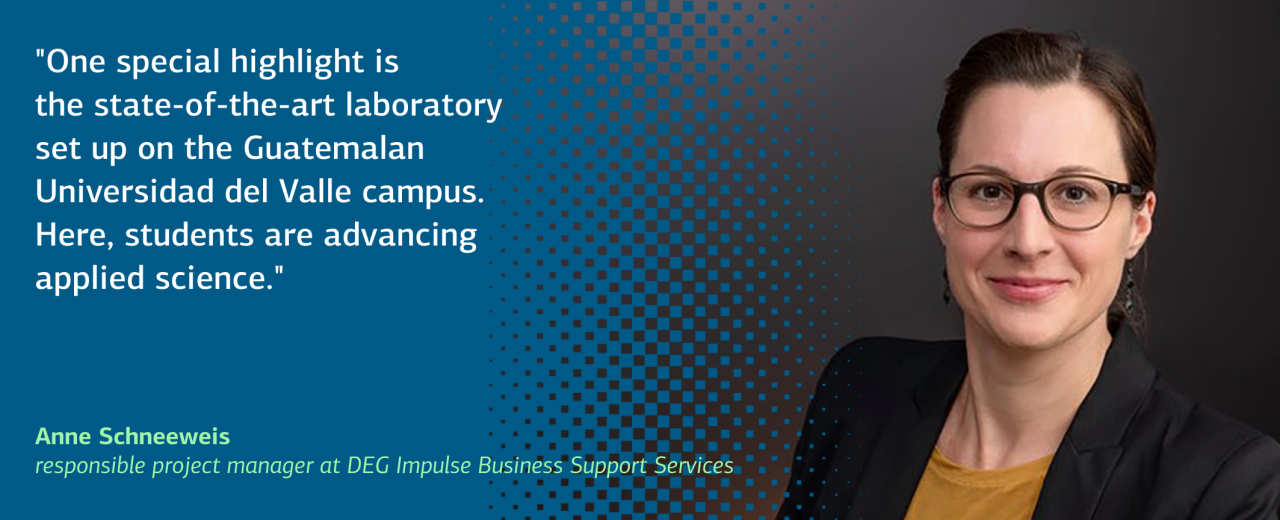
The successes of the project are manifold. Magdalena was able to build technical capacity to produce high-quality microbiological compost, significantly reducing the use of mineral fertilisers. The targeted addition of bacteria, fungi and other microorganisms improves the nutrient supply of the soil and promotes its fertility. At the same time, an innovative harvesting technique ensures that CO2 emissions are reduced. “It was particularly exciting for us how holistically the issue of soil was considered,” summarises Anne Schneeweis. "It wasn't about isolated measures. Rather, the different approaches intertwine. This is the only way to identify the crucial adjustments to effectively improve soil quality."
Magdalena actively shares its knowledge at conferences, in associations and in exchange with other sugar cane producers. The aim is to inspire other farmers to adopt similar sustainable practices – and thus jointly promote environmental protection in the industry.
Share page
To share the current page content with your network, click the button below and then select the desired option in the dialog box.
Note on data protection: By clicking the button, your browser's sharing function is used. If you select an external provider when sharing, personal data may be processed by the provider. Please read our data protection principles for more information.
Your browser does not support sharing with external services.
Alternatively, you can also copy the short link: https://www.kfw.de/s/ennB7JwP
Copy link Link copied