
Press Release from 2026-10-22 / KfW Research
KfW SME Panel 2026: German SMEs are well-positioned to support the upswing
- Their capitalisation proves their resilience, even if they are yet to achieve sustained turnover growth
- Foundation for kickstarting SMEs’ capital expenditure has been laid, but businesses are still dragging their feet
- High prices, uncertain economic trajectory and red tape are perceived as major investment obstacles
Germany is experiencing an economic recovery – and small and medium-sized enterprises are well-positioned to drive it forward on a sustained basis. That is because German SMEs are proving to be resilient despite the numerous challenges of recent years. To be sure, their turnover grew by a paltry 1.5 per cent to EUR 5.3 trillion in 2025. On a price-adjusted basis, that was even -1.5 per cent on the previous year. Nonetheless, businesses were more profitable. Profit margins rose by 0.5 percentage points to 7.5 per cent on average. In other words, businesses generated a profit of 7.5 cents with every euro of turnover. In a historic comparison, profitability has thus returned to pre-COVID-19 levels.
These are some of the findings of the KfW SME Panel, the only representative survey of the entire German SME sector. It surveys enterprises with a turnover of up to EUR 500 million. The survey was conducted from February to July 2026 and was supplemented by a special survey in September 2026.
SMEs’ equity base also developed positively overall. As in 2024, their average equity ratio was a high 30.7 per cent in 2025. The share of thinly capitalised SMEs with an equity ratio below ten per cent fell sharply from more than 28 per cent to just under 24 per cent. At the same time, the share of SMEs with very high equity ratios (in excess of 30 per cent) grew by 1.5 percentage points to more than 51 per cent.
The robust equity base not only shows that businesses have a high capacity to bear losses in difficult times. It also puts them in a good position to shoulder investments alone and obtain debt capital.
Many small and medium-sized enterprises are in a strong financial position. They have the financial capacity to invest in the future – in their digitalisation, innovations, new assets, the climate transition,
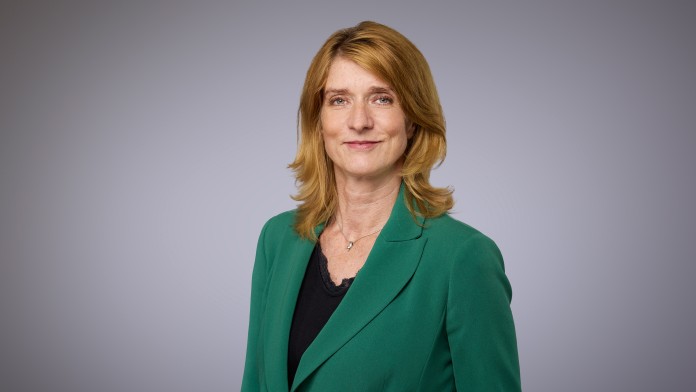
said Dr Dirk Schumacher, Chief Economist of KfW. The bad news is that too many businesses are not yet investing, or too little. They are putting off investment projects. That is a problem for Germany as a business location.
In 2025 the share of companies with completed investment projects was only 40 per cent of all 3.9 million SMEs. The median investment-to-turnover ratio was 5.4 per cent. That means half the investing SMEs invested not more than 5.4 per cent of their turnover in their business. The long-term average is 6.5 per cent. New investment totalled EUR 218 billion, EUR 3 billion less than in the previous year (-3.7 per cent in real terms to EUR 213 billion). In September 2026 many businesses reported deferring investments initially planned for this year to a later date.
According to the September survey, businesses regard the high prices of energy, materials and wages as the greatest barrier to investing. Other factors also weighing on investment activity include uncertainty around where the economy is headed, legal regulations – mainly administrative burdens – and the trajectory of the company’s own turnover.
Their generally good equity situation would allow many SMEs to borrow capital for further investment. But their interest in bank loans remains low. Only ten per cent of all SMEs and a mere 25 per cent of all investing enterprises conducted loan negotiations with banks or savings banks in 2025. The most common reason stated for their restraint was a general unwillingness to incur debt.
But those businesses that were in loan negotiations were overwhelmingly successful and concluded a loan agreement. However, rejections of bank loan offers by micro-businesses increased massively in 2025. The likely reason for this is that credit institutions tightened their requirements because of the difficult economic situation and businesses therefore often viewed their loan offers as unattractive.
The full KfW SME Panel can be found at KfW-SME Panel | KfW
The KfW SME Panel (KfW-Mittelstandspanel) has been conducted by KfW Research since 2003 and provides a representative dataset of small and medium-sized enterprises in Germany. It is the only representative survey of the entire German SME sector, from solo entrepreneurs to large SMEs, making it the most important source of data on issues relevant to the SME sector. The basic population of the KfW SME Panel includes all private-sector companies from all industries with annual turnovers of up to EUR 500 million. A total of 10,773 SMEs took part in the most recent wave. The main survey of the 24th wave of the KfW SME Panel was conducted in the period from 16 February 2022 to 10 July 2026. An additional – equally representative – special survey to the KfW SME Panel on the current business situation was carried out at the beginning of September 2026 (with 2,051 responses).
KfW supports SMEs with a number of promotional programmes on behalf of the Federal Government. More information is available at We are strengthening the SME sector (German page)
Share page
To share the current page content with your network, click the button below and then select the desired option in the dialog box.
Note on data protection: By clicking the button, your browser's sharing function is used. If you select an external provider when sharing, personal data may be processed by the provider. Please read our data protection principles for more information.
Your browser does not support sharing with external services.
Alternatively, you can also copy the short link: https://www.kfw.de/s/enkBbm2w.DePA
Copy link Link copied