
Press Release from 2026-08-27 / Group, KfW Research
KfW Research: Willingness to invest in climate action has grown significantly
- 66 per cent of German households indicate a desire to actively participate in the energy transition
- 14 million households are using at least one energy transition technology – 1.1 million more than in the previous year
- Electric vehicles and photovoltaic systems post fastest growth
People in Germany are showing a renewed willingness to support climate action with investments of their own. The share of households indicating a willingness to take action has grown considerably from 59 per cent in the previous year to now 66 per cent. This has largely offset the declines of recent years.
This is one of the findings of the KfW Energy Transition Barometer, for which more than 4,300 representative households in Germany were surveyed on behalf of KfW Research between December 2025 and April 2026. Eighty-four per cent of households stated that they considered climate action to be important or very important, after a similar share of 83% the year before.
In recent years, many people in Germany showed signs of ‘climate fatigue’. There was less of a focus on the topic of climate action. Now, despite the ongoing economic downturn in Germany, people appear to have changed their minds and want to invest in the energy transition again. That is good news. The unusually hot summer of 2026 has once again highlighted the need for climate action
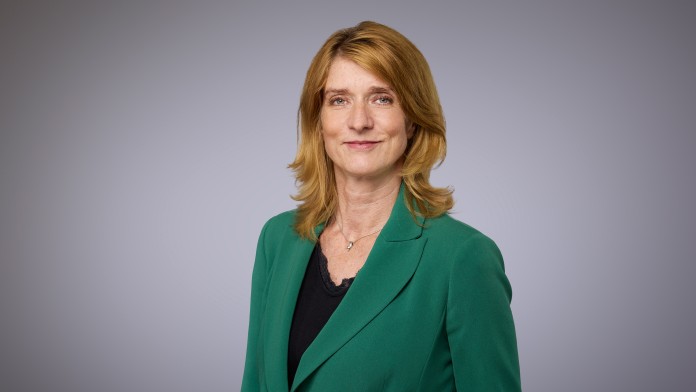
, said Dr Dirk Schumacher, Chief Economist of KfW.
The share of households using at least one energy transition technology has grown to 34 per cent or some 14 million households. That is around 1.1 million households more than in the previous year. In 2025 the increase of 800,000 households on the previous year was considerably lower, which means the expansion has gathered pace. Moreover, five per cent of households plan to adopt an energy transition technology for the first time within a year. According to KfW Research, these include heat pumps, rooftop photovoltaic (PV) systems, solar thermal systems, home batteries, wood pellet heaters and electric vehicles.
Demand for electric vehicles and rooftop PV systems is growing at a particularly fast rate. The share of households with an all-electric or plug-in hybrid vehicle rose from 7 to 10 per cent within a year. In addition, 18 per cent of households have a rooftop PV system, up from 16 per cent in the previous year. More than half of all these PV systems – 55 per cent – are now paired with a home battery. Three years ago it was not even one in three (31 per cent). Among homeowners alone, 34 per cent already have a rooftop PV system and 17 per cent an electric vehicle.
The gap between homeowners and renters remains substantial. Among owner-occupiers of detached and semi-detached houses, 59 per cent use at least one energy transition technology, almost four times as many as households in rented housing (15 per cent). In addition, higher-income households are much more likely to be energy transition “stakeholders” than lower-income households. As prices of fossil fuels continue to rise, this divide means that vulnerable groups are most likely to face growing cost pressures in the future. Almost two thirds of households in Germany (63 per cent) still use natural gas or oil for heating, while nine per cent of households use heat pumps.
Households in the lower income segment often lack the funds to invest in climate-friendly technologies. Rising carbon pricing means these households in particular will carry a disproportionate burden in coming years. In order to broaden the energy transition, it will be important to encourage lower-income households to adopt energy transition technologies through targeted support measures
, said Dr Dirk Schumacher, Chief Economist of KfW.
You can download the current KfW Energy Transition Barometer from KfW-Energiewendebarometer | KfW.
Share page
To share the current page content with your network, click the button below and then select the desired option in the dialog box.
Note on data protection: By clicking the button, your browser's sharing function is used. If you select an external provider when sharing, personal data may be processed by the provider. Please read our data protection principles for more information.
Your browser does not support sharing with external services.
Alternatively, you can also copy the short link: https://www.kfw.de/s/enkBbm2w.Dc-A
Copy link Link copied