
Press Release from 2025-12-22 / Group, KfW Research
KfW Research: SMEs are the mainstay of the dual vocational training system
- More than 90 per cent of all apprentices work in small and medium-sized enterprises – a higher share than 15 years ago
- Training provision is increasingly concentrated
- The state with highest share of businesses with apprentices is Bremen, followed by Schleswig-Holstein and Lower Saxony
SMEs continue to be the cornerstone of the German dual vocational training system. In 2024, some 1 million people received vocational training in SMEs – more than 90 per cent of all apprentices in Germany. Small and medium-sized enterprises have become even more important for the vocational training system in recent years. In 2010 the share still stood at 84 per cent, so it has since grown.
These are among the findings of a study by KfW Research on the situation of dual vocational training in Germany. Last year approx. 1.2 million people were undertaking dual vocational training in Germany, around 19.3 per cent fewer than in 2010. The drop was mainly due to declining numbers of applicants as a result of demographic change and a greater desire of young people to pursue tertiary education.
Although SMEs continue to be the engine for vocational training in the German economy, the share of SMEs delivering vocational training has been declining significantly ever since 2022. Whereas around twelve per cent of businesses had at least one apprentice on average over the years 2010 to 2018, that share was a mere 9.1 per cent in 2024. A major reason for this was the restraint exercised by many businesses in the training market following the outbreak of the COVID-19 pandemic in 2020, followed by further setbacks from the energy price crisis, rising inflation and the difficult economic situation. Over the same period, however, the number of apprentices did not decrease at the same rate as the number of businesses offering training. Dual vocational training is therefore increasingly concentrated in those that continue to provide training.
The rule of thumb is that larger businesses are more likely to provide training. Whereas micro-businesses with fewer than five employees – which make up the lion's share of SMEs – rarely have apprentices (three per cent), 42 per cent of SMEs with ten to 49 employees and 72 per cent of companies with more than 50 employees have apprentices.
Dual vocational training remains an indispensable building block for businesses to secure their future supply of skilled labour. However, our data shows that small and medium-sized enterprises have increasingly stopped providing vocational training in recent years. In order to counteract this trend it would be important to introduce targeted incentives and provide tailored support schemes – particularly in economically difficult times
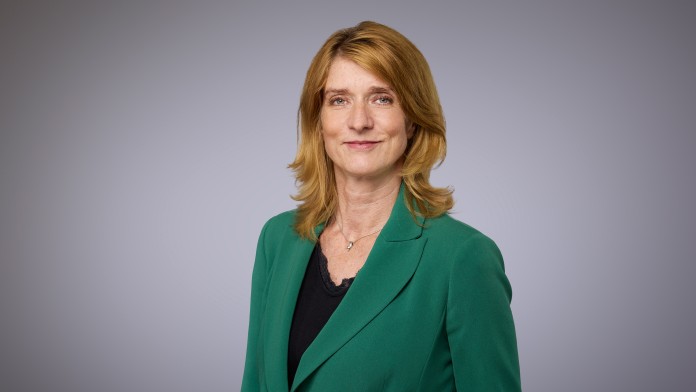
, said Kathrin Schmidt, co-author of the study at KfW Research.
We also need to strengthen the skills of young people with targeted educational measures, since many year-nine students today do not possess the necessary minimum competencies for the intermediate school leaving certificate. Targeted support programmes, comprehensive advisory offerings and simplified administrative procedures could contribute to increasing the willingness of businesses to provide training.
The state with highest share of businesses with apprentices is Bremen. Between 2021 and 2024, 19.1 per cent of businesses there had at least one apprentice. It is followed by Schleswig-Holstein with 14.1 per cent, and Lower Saxony with 14.0 per cent. At the bottom of the table are Berlin with 8.3 per cent, Brandenburg with 7.7 per cent and Hamburg with 6.5 per cent. The differences can in part be explained by the structures of the SME sector in the individual federal states. Service providers often predominate in city-states, and they are less likely to provide training than manufacturers or construction firms. Furthermore, eastern Germany has more micro-businesses.
The study can be found at Focus on Economics | KfW
The study is based on the KfW SME Panel, the only representative survey for the entire German SME sector. More than 13,000 businesses participated in the survey between February and June 2025.
KfW supports SMEs with a number of promotional programmes on behalf of the Federal Government. More information is available at We are strengthening the SME sector (German page).
Share page
To share the current page content with your network, click the button below and then select the desired option in the dialog box.
Note on data protection: By clicking the button, your browser's sharing function is used. If you select an external provider when sharing, personal data may be processed by the provider. Please read our data protection principles for more information.
Your browser does not support sharing with external services.
Alternatively, you can also copy the short link: https://www.kfw.de/s/enkBbm2w.DV0A
Copy link Link copied