
Press Release from 2026-11-19 / GroupKfW Research: Main construction industry hit hardest by skills shortages
- 31 per cent of businesses in the main construction industry complain about lack of skilled workers
- Across all sectors, 23 per cent of businesses report a shortage of skilled labour
- Recovery is gradually advancing into the manufacturing sector, where shortages are worsening
The skilled labour shortage is affecting German businesses to different degrees. The main construction industry in particular is looking for skilled workers. In October, nearly 31 per cent of companies in this sector reported that their business activity was hampered by a shortage of skilled labour. A year before it was as much as 32 per cent.
Building companies are recording a sharp rise in public-sector contracts for projects financed under the Special Fund for Infrastructure and Climate Neutrality. The shortage of skilled workers is a significant obstacle to the implementation of construction projects.
In October, 19.6 per cent of manufacturing businesses complained about skills shortages, up 2.5 percentage points from a year ago. This is a reflection of the economic recovery. Businesses are hiring more staff again, which means they are also looking for skilled talent, often in vain. Beverage manufacturers in particular reported a lack of skilled workers (34.7 per cent), as did manufacturers of paper and cardboard products (37.8 per cent) and electrical equipment (21.3 per cent).
Among services businesses, 24.7 per cent of respondents were affected by skilled labour shortages. Shortages are also affecting more than 40 per cent of law firms, tax accountancies and auditing firms, as well as road and rail transport services and facility management and gardening services. In catering establishments, architecture and engineering firms as well as transport and storage companies it was more than 30 per cent.
At the beginning of the fourth quarter, 23 per cent of businesses across all sectors reported being impacted by skilled labour shortages. That is still quite a high rate in a long-term comparison. It thus remained nearly unchanged in the course of the year, dropping by three percentage points from October 2025. It had reached a record level in the summer of 2022 with just under 50 per cent of businesses.
Germany has around 4.6 million jobseekers and a dormant reserve of 1.3 million employable people that could be available to the labour market at short notice. At the same time, there are around 1 million job vacancies. Hiring difficulties are therefore not due to an insufficient supply of working-age people
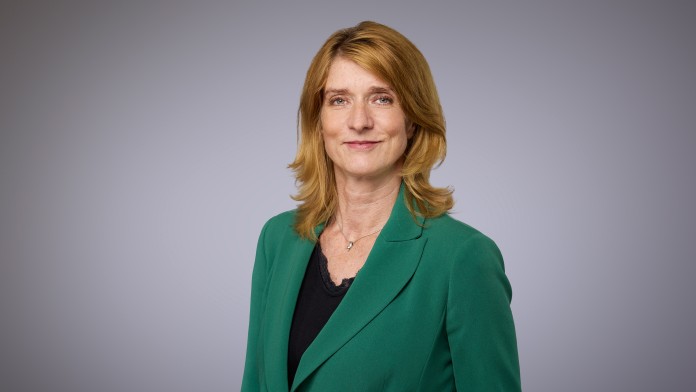
, said Dr Dirk Schumacher, Chief Economist of KfW. The main causes of skilled labour shortages are lack of qualifications and the fact that many jobseekers have limited regional mobility.
You can find the KfW-ifo Skilled Labour Barometer at: KfW-ifo Skilled Labour Barometer | KfW
KfW supports SMEs with a number of promotional programmes on behalf of the Federal Government. More information is available at We are strengthening the SME sector (German page).
Share page
To share the current page content with your network, click the button below and then select the desired option in the dialog box.
Note on data protection: By clicking the button, your browser's sharing function is used. If you select an external provider when sharing, personal data may be processed by the provider. Please read our data protection principles for more information.
Your browser does not support sharing with external services.
Alternatively, you can also copy the short link: https://www.kfw.de/s/enkBbm2w.DfMA
Copy link Link copied