
Press Release from 2026-08-05 / Group, Investor Relations
KfW: Strong first half of the year - new commitments rise by 46 percent to around EUR 58 billion
- SME support for climate and environment projects more than doubled to EUR 11.2 billion
- Strong demand from private customers for the Federal Funding for Efficient Buildings programme, including promotion of heating replacement
- Export and project financing grew by 33 percent to EUR 15.4 billion
- Economic result of EUR 1,238 million significantly above the previous year – Consolidated profit of EUR 877 million
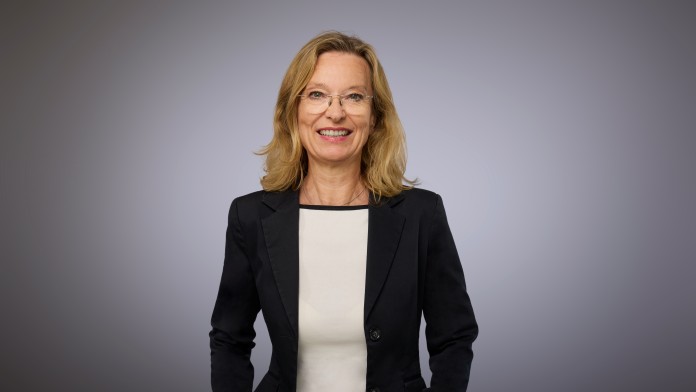
- Stefan Wintels:
It is very pleasing that we were able to significantly increase consolidated earnings. KfW uses this financial stability to effectively support the economy and society.
Frankfurt am Main - KfW Group recorded a very good first half of the year and made financing commitments amounting to EUR 57.7 billion (01–06/2025: EUR 39.4 billion). Commitments for KfW’s core promotional business thus were at record level at the half-year stage. New business was around 46 percent higher than the previous year’s level.
The second quarter was even stronger than the already robust first quarter, particularly in domestic promotion. Commitments reached EUR 38.9 billion by mid-year (01–06/2025: EUR 25.3 billion). Demand for promotional loans for climate and environmental projects in the SME segment was particularly strong (EUR 11.2 billion compared with EUR 5.3 billion in the prior-year period). Programmes for private customers – particularly funding for energy-efficient buildings, including subsidies for heating replacement – were also once again in high demand.
At KfW Capital, commitments for fund investments more than doubled to EUR 389 million (01–06/2025: EUR 146 million).
The consistently high demand for our KfW promotional programmes for climate and environmental projects clearly shows that companies and private customers are willing to invest in the future, provided the framework conditions are right
, said Stefan Wintels, Chief Executive Officer of KfW.
With our low-interest loans and grants, we are creating effective incentives for investments. Our support makes an important contribution to growth, employment and Germany’s long-term economic competitiveness.
New business in export and project finance was EUR 15.4 billion, exceeding the prior-year level by around 33 percent (01–06/2025: EUR 11.6 billion). The increase was driven by the use of attractive market opportunities and the successful completion of several large individual transactions.
At EUR 3.1 billion, commitments at KfW Development Bank were well above the previous year's level (01-06/2025: EUR 2.0 billion). This was mainly due to some large-volume commitments. A large proportion of these commitments consist of KfW’s own funds. German and European economic interests are becoming increasingly important in this regard. DEG also recorded an increase in commitments to EUR 0.9 billion (01-06/2025: EUR 0.6 billion).
In the first half of the year, KfW Group achieved an economic result (consolidated profit before IFRS effects, promotional expense and taxes) of EUR 1,238 million. This was around 50 percent above the previous year’s figure (01–06/2025: EUR 824 million).
In its promotional business, KfW used EUR 237 million of its own funds as promotional expense to improve the terms of its funding programmes, even in difficult times (01–06/2025: EUR 246 million). The focus was on supporting start-ups and business investment, innovation, the environment and sustainability, as well as energy efficiency and renewable energy. As a result, the promotional business volume increased by around 30 percent. At EUR 877 million, consolidated profit significantly exceeded the prior-year figure (01–06/2025: EUR 289 million).
The significantly improved economic result is the financial basis for our ability to act as the promotional bank of the Federal Government and the federal states. This financial strength is a prerequisite for strengthening our equity base and reducing interest rates in our promotional programmes
, said Wintels.
The positive development of operating income (operating result before valuation and promotional expense), which at EUR 1,103 million was above the previous year’s figure (01–06/2025: EUR 969 million), was primarily attributable to net interest income (before promotional expense), which at EUR 1,567 million was significantly higher than in the previous year (01–06/2025: EUR 1,436 million). Net commission income (before promotional expense), which mainly comprises remuneration for promotional activities carried out on behalf of the Federal Government, reached the previous year’s level at EUR 340 million (01–06/2025: EUR 336 million). At EUR 805 million, administrative expense (before promotional expense) was stable compared to the prior-year period (01-06/2025: EUR 803 million).
The result from risk provisions for lending remained moderate at EUR -74 million (01-06/2025: EUR -95 million). It is based on additions to general risk provisions for lending and to specific loan loss provisions. This was offset by recoveries on loans written-off.
The investment portfolio contributed EUR 192 million (01–06/2025: EUR 110 million) to the valuation result, primarily due to the positive performance of the KfW Capital business sector, which with EUR 119 million continued the positive trend in venture capital financing. The DEG and KfW Development Bank business sectors also made a positive contribution to the valuation result.
The result from foreign currency translation (before IFRS effects) amounted to EUR 28 million (01-06/2025: -EUR 174 million). This includes DEG’s investments held in foreign currencies and their partial hedging.
Taxes on income amounted to EUR 90 million (01-06/2025: EUR 68 million). Purely IFRS-related valuation effects from derivatives used for hedging purposes reduced earnings by EUR 34 million (01-06/2025: EUR –222 million).
Total assets stood at EUR 550.4 billion, which is EUR 9.7 billion above the level as of 31 December2025 (EUR 540.7 billion). This development was mainly due to an increase in liquidity and net lending volume.
With a total capital ratio and common equity tier 1 (CET1) ratio of 28.1% each, the regulatory capital ratios remained at a very good level (31/03/2026: 28.5% and 28.4%, respectively). The decline in the capital ratios was mainly due to an increase in the total risk exposure related to new business, as well as to higher regulatory capital deductions.
Details on the business sectors’ promotional activities
1. SME Bank and Private Clients
In the SME Bank and Private Clients business sector, the promotional business volume stood at EUR 32.9 billion as of 30 June 2026, more than 50 percent above the previous year’s level (01–06/2025: EUR 21.2 billion).
SME Bank
In the first half of the year, promotional loans totalling EUR 16.5 billion were committed in the SME Bank (01–06/2025: EUR 10.2 billion).
The priority area of start-ups and corporate investment reached EUR 3.9 billion, exceeding the previous year’s level (01–06/2025: EUR 3.3 billion).
Demand was particularly strong in the focus area of climate change and the environment. By the end of June 2026, funding commitments totalled EUR 11.2 billion, more than twice the level of the prior-year period (01–06/2025: EUR 5.3 billion). The positive market environment, particularly in the onshore wind market, is boosting the “Renewable Energies - Standard” programme, in which EUR 7.6 billion was committed (01-06/2025: EUR 3.6 billion). The “Climate Action Campaign for Corporates” programme also significantly exceeded the prior-year figure (01-06/2025: EUR 0.3 billion) with new commitments amounting to EUR 2.0 billion.
At EUR 1.5 billion, innovation financing reached the prior-year level in the first half of the year.
Private Clients
In the Private Clients segment, new commitments also increased significantly, reaching EUR 16.4 billion, well above the prior-year level (01–06/2025: EUR 11.0 billion).
The increase was primarily driven by strong demand in the priority area of energy efficiency and renewable energy. Funds amounting to EUR 12.9 billion were committed in this area (01-06/2025: EUR 7.1 billion). This was driven in part by higher new commitments under the "Climate-friendly Construction" programme (EUR 5.4 billion against EUR 1.6 billion in the prior-year period), supported by the reintroduction of Energy Efficiency Standard 55. Interest in the Federal Funding for Efficient Buildings programme, including subsidies for heating replacement, also remained high; new commitments at EUR 6.5 billion exceeded the prior-year figure (01–06/2025: EUR 5.2 billion).
Commitments in the residential and housing programmes fell slightly to EUR 2.8 billion (01-06/2025: EUR 3.0 billion).
In the area of education financing, new commitments stood at around EUR 0.8 billion as of 30 June 2026, in line with the previous year’s level.
1. Customised Finance and Public Clients
The Customised Finance & Public Clients business sector achieved a commitment volume of around EUR 5.6 billion in the first half of 2026, significantly exceeding the prior-year figure (01-06/2025: EUR 4.0 billion).
Commitments totalling EUR 3.8 billion were made in the municipal and social infrastructure segment. Against the backdrop of a favourable market environment, the significant increase compared with the previous year’s prorated figure of EUR 2.8 billion was primarily attributable to large individual commitments under the basic promotion for municipal energy suppliers and the “Digital Infrastructure Investment Loan” programme.
Customised finance for corporates reached a commitment volume of EUR 339 million in the first half of the year., The previous year’s result (01–06/2025: EUR 213 million) was exceeded, due, in particular, to a large syndicated loan commitment under the Sustainable Transformation programme.
At around EUR 1.5 billion, Individual financing for banks and promotional institutions of the federal states also recorded an increase (01–06/2025: EUR 1.0 billion), primarily due to general refinancing for promotional institutions of the federal states and the promotion of SMEs through global leasing loans.
2. KfW Capital
The good start to the year for the KfW Capital business sector continued in the second quarter: commitments amounted to around EUR 389 million in the first half of 2026 (01-06/2025: EUR 146 million). The increase was attributable to commitments under the ERP VC Fund Investments programme (European Recovery Program Venture Capital Fund Investments), under which KfW Capital invested EUR 117 million at its own risk in European VC funds with a focus on Germany, and to commitments under the Federal Government’s Future Fund, under which a further approximately EUR 117 million was invested on a fiduciary basis via the European Investment Fund (EIF). In addition, investment commitments totalling EUR 130 million were made in the first half of the year through the VC pillar of the Germany Fund, which is managed by KfW Capital, under the Tech Fund Invest programme, and a further EUR 25 million committed under the Scale-up Direct programme in the form of co-investments. Overall, both KfW Capital’s VC fund investment pipeline and its co-investment pipeline are well filled for the remainder of the year.
KfW Capital also acts as investment adviser to the “Germany Growth Fund”, which, with a total volume of just over EUR 1 billion, is one of the largest venture capital fund-of-funds in Europe. More than two thirds of the capital was provided by private institutional investors. The fund is almost fully invested: By the end of the first half of 2026, around EUR 935 million had been committed to 48 VC funds.
3. KfW IPEX-Bank
KfW IPEX-Bank, which is responsible for the Export and project finance business sector and provides financing to support German and European companies in the global markets, continued its strong start to the year. By the end of the first half of the year, new commitments had reached EUR 15.4 billion, exceeding the prior-year figure (01–06/2025: EUR 11.6 billion) by about 33%. All sector departments contributed to new business. However, the Energy sector department deserves particular mention: at EUR 4.9 billion, it accounted for almost one third of new commitments (01–06/2025: EUR 2.8 billion). The Mobility business area, which comprises the Rail, Maritime Industry and Aviation departments, also performed almost as strongly, accounting for EUR 4.8 billion (01–06/2025: EUR 4.1 billion). The second quarter included financing for wind farms in Canada, Scotland and Ukraine, as well as solar and battery storage projects in Chile, Australia and Canada. Additional financing was provided for the production of sustainable aviation fuel in Brazil, electric buses and charging infrastructure in the United Kingdom, as well as the largest district heating network in Western Europe in Berlin. With these financings, KfW IPEX-Bank supports Germany and Europe as business locations, while also supporting the global transformation process.
4. Promotion of developing countries and emerging economies
5. KfW Development Bank
In the first half of 2026, the KfW Development Bank business sector committed EUR 3.1 billion for projects in developing countries and emerging economies (01-06/2025: EUR 2.0 billion). KfW’s own funds account for the majority: EUR 2.3 billion, of which EUR 1.3 billion related to commitments for projects in Asia. A total of EUR 661 million was committed for two projects in Indonesia, where KfW Development Bank is supporting the sustainable energy transition with EUR 261 million, and a programme to strengthen competitiveness and trade with EUR 400 million. This loan is geared towards economic policy objectives. Through its link to the free trade agreement with the EU and the OECD accession process, it strengthens Indonesia’s positive outlook as a promising growth market, especially also for German companies. EUR 162 million was committed to projects in Ukraine, of which EUR 46 million during the Ukraine Recovery Conference in June in Gdansk. The “European Flagship Fund for the Reconstruction of Ukraine”, which aims to mobilise private investment in modern, resilient infrastructure, was also launched there. On behalf of the Federal Ministry for Economic Cooperation and Development (BMZ) and the European Commission, KfW plays a leading role in the financing consortium together with the EIB (European Investment Bank), BGK (Bank Gospodarstwa Krajowego), CDP (Cassa Depositi e Prestiti) and Proparco. The fund’s target volume is EUR 1 billion by the end of 2027.
DEG
In the first half of 2026, DEG was able to further expand the financing and support of private companies in developing countries and emerging economies. As of 30 June 2026, new commitments from DEG’s own funds reached EUR 903 million, significantly exceeding the prior-year figure of EUR 556 million.
Commitments to private companies in Latin America accounted for the largest share, at EUR 359 million. EUR 229 million was committed for projects in Asia and EUR 154 million for the Africa/MENA region.
The strong performance was driven, among other things, by financing for banks in Latin America. Together with the loans provided by DEG, these enable investments, particularly by small and medium-sized enterprises. Other funds went to telecommunications service providers to help improve digital infrastructure and economic participation in African countries.
6. Financial markets
KfW increased its funding target for 2026 from EUR 75 to 80 billion to EUR 80 to 85 billion at the beginning of July as part of the regular review. This reflects both the strong development of domestic promotional business since the beginning of the year and the expected positive trend in the coming months.
In the first half of 2026, KfW successfully raised EUR 58.2 billion in the international capital markets to fund its promotional business (01-06/2025: EUR 50.3 billion). This means that over 70 percent of the funding of EUR 80 to 85 billion planned for the full year has already been realised. With inflows of EUR 34.7 billion, the European home currency accounted for the largest share (60 percent), followed by the US dollar with an equivalent of EUR 12.6 billion (22 percent). Behind the pound sterling (EUR 5.8 billion), the Hong Kong dollar at EUR 2.3 billion rose to the fourth most important funding currency in the first half of 2026, or four percent of the total funding volume.
The first half of 2026 was also very dynamic in the green bond segment: The green bond volume reached EUR 12.6 billion, which was around a third higher than in the prior-year period (EUR 9.5 billion). A total of eleven transactions were issued in six different currencies, with a particular focus on large, liquid euro green bonds, which have formed part of the KfW benchmark programme since the beginning of the year.
In addition, KfW Treasury implemented further digitalisation projects in the first half of 2026 to help shape the future European financial market infrastructure. Along the entire value chain, KfW tested blockchain-based pilot transactions, settlement models based on distributed ledger technology (DLT), interoperability scenarios and experiments with digital central bank money together with market participants. Recent milestones in June 2026 included the third issuance of a DLT-based KfW bond as a crypto security under the German Electronic Securities Act (eWpG), as well as an investment in the DLT-based bond issued by the State of Saxony-Anhalt – the first crypto security issued by a German federal state.
1) The capital ratios stated take into account the eligible interim results according to Art. 26 (2) of the Capital Requirements Regulation (CRR), which deviate from the respective annual results in accordance with the IFRS.
An overview of the business and promotional figures is available in table form at: Business and Promotional Figures | KfW
KfW Annual Report online: Reporting Portal | KfW
Share page
To share the current page content with your network, click the button below and then select the desired option in the dialog box.
Note on data protection: By clicking the button, your browser's sharing function is used. If you select an external provider when sharing, personal data may be processed by the provider. Please read our data protection principles for more information.
Your browser does not support sharing with external services.
Alternatively, you can also copy the short link: https://www.kfw.de/s/enkBbm2w.DcpA
Copy link Link copied