
Press Release from 2026-07-15 / Group
A successful first half-year for the Germany Fund: Initial investments made; further funding measures to follow shortly
- The Raw Materials Fund has made a successful start with its first two investments. The aim is to increase available funding for raw materials projects focusing on the extraction, processing and recycling of critical raw materials to a total of EUR 1.5 billion.
- Over the next ten years, the German Federal Government and KfW will provide a further EUR 1.5 billion specifically to support start-ups, scale-ups and the wider SME landscape. Part of this commitment involves expanding and continuing the Future Fund.
- Initial investments have now been made in industrial enterprises, SMEs, energy companies, start-ups and scale-ups, with further funding measures set to follow.
Launched in December 2025, the Germany Fund has made a successful start. The Germany Fund was established to mobilise private capital for investments in the future, thus increasing the competitiveness of the German economy. Private investment is a key factor for more growth in Germany. The Germany Fund aims to channel private capital to the businesses and sectors where innovation takes root and growth becomes possible. It comprises various instruments designed specifically to address the needs of industry, SMEs, fledgling enterprises, start-ups, scale-ups and energy supply companies.
As a key government initiative to mobilise private capital, the Germany Fund has used the previous six-month period to successfully initiate its first fundings, using public incentives to unlock private investments in strategically important sectors. Further projects and measures are set to follow shortly. Over the next ten years, the German Federal Government and KfW will provide a further EUR 1.5 billion specifically for the start-ups, scale-ups and SMEs target group.
As a component of the Germany Fund, the Raw Materials Fund has made the investment decisions to invest in two raw materials projects for the extraction of rare earths and lithium. In addition, equity investments in German technology start-ups have been made under the Germany Fund. The securitisation module to improve access to credit for SMEs has also been launched; the first guarantee-backed financing transactions for the production of transition technologies are expected to follow shortly. There are also other projects in the pipeline: Preparations are under way for “MittelstandsKapital”, which is due to launch in autumn 2027. In the energy sector, three additional components of the Germany Fund are nearing completion and will be rolled out shortly. The new “WIN 400” venture capital programme is also up and running as of today.
Lars Klingbeil, Federal Minister of Finance:
The Germany Fund is an instrument that we can use to make Germany more innovative and competitive. Our goal now is to keep expanding the Germany Fund following its initial success. We use public funding strategically to unlock investment on a far greater scale. The Germany Fund can hedge risks, thereby ensuring that the best ideas are nurtured in Germany and have the chance to flourish. Through this approach, we can ensure greater investment in future technologies such as artificial intelligence and biotechnology while at the same time providing a boost for industry and SMEs today. We are also investing to strengthen our security, resilience and independence when it comes to critical raw materials. Furthermore, we are establishing a residential housing fund in partnership with KfW to facilitate the construction of more affordable homes.
Katherina Reiche, Federal Minister for Economic Affairs and Energy:
Germany is home to strong businesses and effective technologies. Financing is often the factor that determines how quickly new production facilities, modern energy networks and internationally successful growth companies can be established. This is precisely where the Germany Fund comes in. Through guarantees, loans and equity investments, the state deliberately assumes part of the risk, creating the space required for private investment to be mobilised on a far greater scale. Around EUR 30 billion in public funds and guarantees are expected to facilitate investments totalling around EUR 130 billion.
The first instruments are now up and running, and the first investment in a scale-up has been realised. We are now expanding the fund on a progressive basis. We are bolstering the financing of critical raw materials projects and making additional growth capital available for start-ups and scale-ups. These measures are closing gaps in financing while providing businesses with the means to further develop their technologies, production processes and value creation opportunities in Germany.
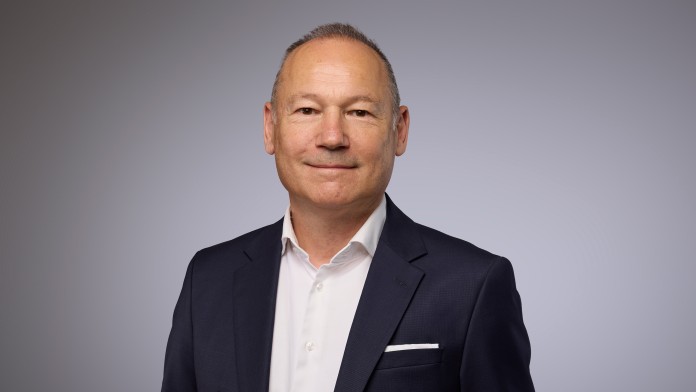
Stefan Wintels, Chief Executive Officer of KfW:
The first six months since its launch confirm that the Germany Fund is already driving investment in and for Germany. Together with the German government, KfW will evaluate the initial projects and use the lessons learned to further develop the Germany Fund, turning these early successes into sustained momentum that drives investment in Germany. Our goal remains the same: to encourage private investment in the first place, not least through the application of new financing instruments.
A closer look at the Germany Fund: projects and progress
Private capital is being mobilised for the intended target group – start-ups and scale-ups – and funding opportunities are expanded:
1. KfW Capital has invested directly in several enterprises as part of the Scale-up Direct investment programme since December 2025. Interest in Scale-up Direct is very high, with the result that further investments are expected by the end of the year.
2. The “Tech-Fondsinvest” programme will be topped up with federal government funding and supplemented by funds from KfW with the aim of continuing and consolidating the Future Fund. In real terms, this means approximately EUR 770 million in additional funding will be available for investments in venture capital funds through this widely applicable programme. In this context, KfW Capital’s annual commitment volume will be increased by EUR 50 million to EUR 250 million per year.
3. Since the launch of the Germany Fund in December, KfW Capital has already committed around EUR 185 million to several venture capital (VC) funds. Under this programme, too, VC funds must (at the minimum) invest an amount equal to KfW Capital’s contribution in German start-ups and innovative technology companies, with a particular focus on deep tech, biotech and AI.
4. KfW is also making EUR 400 million available for innovative fund approaches through the Germany Fund within the scope of the WIN 400 programme. These include VC investments in the security and defence industries, secondary funds and highly innovative solutions in the deep tech sector, as well as in funds focusing on corporate succession and the transformation of SMEs.
The Germany Fund is already making a real difference for industrial companies and SMEs:
1. The Raw Materials Fund is gaining momentum and is set to be expanded considerably: The planned increase to EUR 1.5 billion will support the development of further critical raw materials projects through to 2030. This represents a milestone in ensuring the security of supply and industry's resilience when it comes to critical raw materials. The expansion of the Raw Materials Fund is the subject of the forthcoming parliamentary budget debate.
Two investments have already been completed, with a third project currently being assessed as part of the due diligence process. Additional promising projects are currently under review ahead of investment decisions. On behalf of the German government, KfW has provided EUR 150 million in equity capital for Vulcan Energy Resources' climate-neutral lithium production project, as well as EUR 50 million for a rare earths extraction project by Arafura Rare Earths. Measures are now being introduced to ensure better coordination between the funding instruments for the procurement of strategic raw materials and to facilitate a consistent market approach.
2. Securing large advance payments, warranty obligations and implementation services through guarantees enables companies to undertake projects that are much larger in scope than before. A transaction in the wind energy sector is expected to close shortly.
3. The Germany Fund is also intended to bridge the gap between SMEs and the capital market via securitisation. By relieving financing partners of risk and equity burdens, this creates additional opportunities for new loans. In early June, KfW invested in securitisations backed by lease receivables from German SMEs, with further transactions in the pipeline.
4. With RegioInnoGrowth (RIG) set to expire in August 2027, the German government and KfW are working with regional development institutions to develop its successor programme: MittelstandsKapital. The programme is intended to strengthen growth and innovation financing across the wider SME sector through equity and equity-like financing, while continuing to support the innovative start-ups already backed by RIG. The programme provides the flexibility to address regional needs. Building on the RIG model, federal funding will be complemented by state funding through regional programmes, while also involving private investors.
The Germany Fund has made significant progress in supporting investment in energy infrastructure:
1. The next step for KfW is to prepare loan instruments for energy companies. The Energy Supply Investment Loan and the KfW Energy Supply Syndicated Loan are designed to increase the number of financing options for investment in district heating and cooling infrastructure, including generation, storage and distribution, as well as the expansion of Germany's electricity distribution grid. Both programmes are scheduled to be introduced in August. The Renewable Energy Plus programme, which includes a liability exemption, is likewise designed to encourage greater lending for renewable electricity, heating and cooling generation and energy storage through risk sharing and an additional interest rate reduction. The launch of Renewable Energies Plus with its accompanying liability exemption is scheduled for launch in autumn 2026.
2. The German government is currently working with the federal states and the regional development institutions to establish a programme that will provide mezzanine capital to energy suppliers starting in 2027. The aim is to reinforce the capital base of energy suppliers and enable them to raise additional debt in order to fund investments in electricity distribution and heating networks. This product also allows for the involvement of private investors in the overall financing scheme.
3. The KfW Geothermal Energy Promotional Loan is the first scheme to be launched that addresses a key investment barrier: the risk of not finding a geothermal reservoir during drilling operations. Seven geothermal projects are currently under review, while other projects have expressed their interest.
Click the links for more information, including a graphic and fact sheet.
Access the Germany Fund website here: Deutschlandfonds
Share page
To share the current page content with your network, click the button below and then select the desired option in the dialog box.
Note on data protection: By clicking the button, your browser's sharing function is used. If you select an external provider when sharing, personal data may be processed by the provider. Please read our data protection principles for more information.
Your browser does not support sharing with external services.
Alternatively, you can also copy the short link: https://www.kfw.de/s/enkBbm2w.DcBB
Copy link Link copied