
Press Release from 2026-07-02 / Group, Investor Relations
KfW increases funding target for 2026 to EUR 80 to 85 billion
- Strong promotional business drives need for funding
- KfW sets the stage for digital capital market infrastructure
- High demand from international investors despite crises
KfW is increasing its funding target for 2026 from EUR 75 to 80 billion to EUR 80 to 85 billion. This reflects both the strong development of domestic promotional business since the beginning of the year and the expected positive trend in the coming months. In the first half of the year, in the midst of a volatile environment, the promotional bank has already raised EUR 58 billion in the international capital markets.
Our higher funding target is above all an expression of our very successful promotional business. The decisive factor is that we can meet this additional need from a position of strength. In the first half of the year, we once again demonstrated that we can reliably place large volumes even in a market environment characterised by uncertainty. Our broad position, our international investor base and the high liquidity of our bonds are important parameters here,”
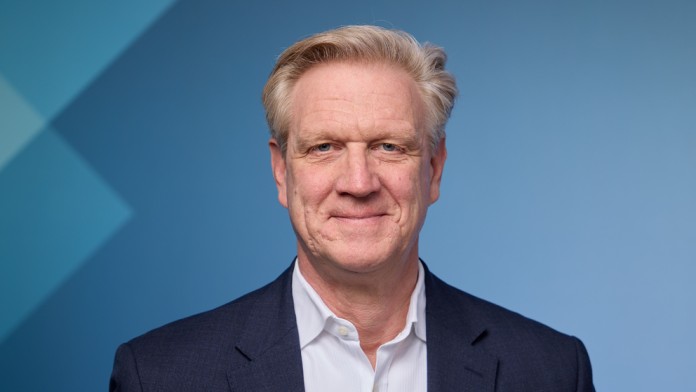
says Tim Armbruster, Treasurer at KfW Group.
In addition to large-volume euro and USD benchmark transactions – including euro green bonds – funding in the first half of the year included public issues and private placements in nine other currencies. Practical trials of digital capital market infrastructures were another key strategic priority.
In the first half of 2026, KfW participated in several digital pilot transactions both as investor and as issuer. Innovative borrowing processes, DLT-based financial market infrastructures and bond payment processing in central bank money under realistic market conditions were tested. These included, among others, Project Sovereign with the Bank of Greece and SWIAT, the acquisitions of crypto securities issued by DZ BANK and the federal state of Saxony-Anhalt as well as the issue of the third digital bond as a crypto security in line with the Electronic Securities Act (eWpG).
For the crypto bond issued at the beginning of June, a “rigorous test” under real market conditions is planned for autumn. For example, both the registrar and the underlying DLT infrastructure are to be changed during the term of the bond. At the same time, KfW is testing new methods for payment processing in central bank money, first via the trigger solution of the Deutsche Bundesbank and later via the planned Pontes infrastructure of the Eurosystem.
As a large international issuer, we can help bring digital capital market infrastructure out of the pilot phase. This requires not only technology, but also trust, standardisation and connectivity to existing market processes. This is precisely where we see our role,”
says Treasurer Tim Armbruster.
In its core activity of funding via the capital markets, KfW’s Financial markets department once again benefited from its flexible funding strategy and broad currency diversification and, in a volatile environment, was able to use opportunities and issue windows in various markets in a specific and timely manner. In January alone, it achieved a volume of EUR 19 billion and thus had one of the most successful funding months in its history.
With a share of around 60%, the euro remains the most important currency in KfW’s portfolio and its central funding instrument. KfW’s euro benchmark bonds continue to serve as an important benchmark and anchor point in the market for many issuers. Accordingly, KfW’s new issues in euro were significantly less volatile than those of other promotional banks and SSAs. One of the striking factors was stronger demand from the Asia-Pacific region.
In the strategically important US dollar market, in recent months KfW has benefited from high market liquidity and increased investment pressure on the investor side – additionally supported by its status as a safe haven in times of geopolitical uncertainty. This led to a significant increase in order books despite the continued narrow spreads. The US dollar share in funding amounted to 22% in the first half of the year.
The Hong Kong dollar was also particularly dynamic, rising to the fourth most important currency in KfW’s funding mix in the first half of the year with a share of 4%. With a benchmark-sized HKD bond (HKD 6 billion) and local clearing, KfW issued the largest bond ever issued by a European public issuer in the emerging “Wonton” market. In doing so, it not only responded to the growing interest of international investors in the HKD market, but also made targeted use of the high liquidity in Asia.
In the green segment, KfW placed eleven green bonds in six currencies in the first half of the year, generating net revenues of around EUR 12.6 billion. This included two large-volume euro benchmark bonds, each with a volume of EUR 5 billion. Another issue of this type is planned for the second half of the year. KfW is thus putting into effect a paradigm shift in its green bond strategy. It is now placing even greater emphasis on the liquidity of its bonds in this segment as well and is increasingly establishing itself as a benchmark for other issuers. The latest Green Bond Framework, which has been in effect since 2024, creates additional scope for the use of green assets.
For the second half of the year, KfW is planning further issues amounting to around EUR 22 to 27 billion, with the euro and US dollar still playing the central role. In addition, the use of market opportunities, selected foreign currencies and the practical testing of digital capital market infrastructure and green bonds remain priorities for KfW.
Share page
To share the current page content with your network, click the button below and then select the desired option in the dialog box.
Note on data protection: By clicking the button, your browser's sharing function is used. If you select an external provider when sharing, personal data may be processed by the provider. Please read our data protection principles for more information.
Your browser does not support sharing with external services.
Alternatively, you can also copy the short link: https://www.kfw.de/s/enkBbm2w.DbzB
Copy link Link copied