
Press Release from 2025-08-05 / Group, KfW Research
KfW Research: Electric vehicles are charging ahead
- Global market share has more than doubled in three years
- Share of pure electric vehicles in German car exports has risen to 27 per cent
- Electric cars now make up 29 per cent of new vehicle registrations in Germany
- More than one third of charging current comes from self-generated green electricity – a new record
Electric vehicles are charging ahead. The global market share of electric cars has more than doubled in three years. That means one in five new vehicles is already electric. These are among the findings of a current study by KfW Research.
The trend is positive in Germany, too. The share of pure electric cars in German car exports has grown to 27 per cent. In the first quarter, 82,000 pure electric cars worth EUR 3.4 billion were exported on average each month. Thus, the value of exports was five times higher than the value of imports.
Another finding was that the share of pure electric and plug-in hybrid electric vehicles in new vehicle registrations in Germany has grown continuously since the beginning of 2024. Recent figures for the second quarter show a 29 per cent share of electric vehicles in new registrations compared with less than 20 per cent in the first quarter of 2024.
The signs that electric mobility is increasingly gaining traction in Germany are growing. Climate action and the German automotive industry could both benefit from further electrification”,
said Dr Johannes Rode, Senior Economist at KfW Research and co-author of the study.
According to the KfW Energy Transition Barometer, around half the households surveyed (49 per cent) are open to the use of an electric car. Ten per cent already own a car with an electric drive. However, only three per cent of households plan to acquire an electric vehicle next year – the lowest share of the past years. Thirty-seven per cent categorically rule out using one, and eight per cent would drive an electric car only if other drive technologies were no longer available.
Consumers generally have fewer reservations about electric vehicles than they used to. Although the high purchase price remains the main reason not to buy an electric car, at 59 per cent, concerns about the charging infrastructure have decreased from 72 per cent five years ago to 51 per cent. Range anxiety has also decreased during this period – from 54 per cent to 44 per cent. And only 30 per cent see charging times as an impediment compared with almost 50 per cent before.
In 2020, almost every other household cited doubts about environmental sustainability as the reason for not buying an electric car. In 2025, that share decreased to just 34 per cent of households.
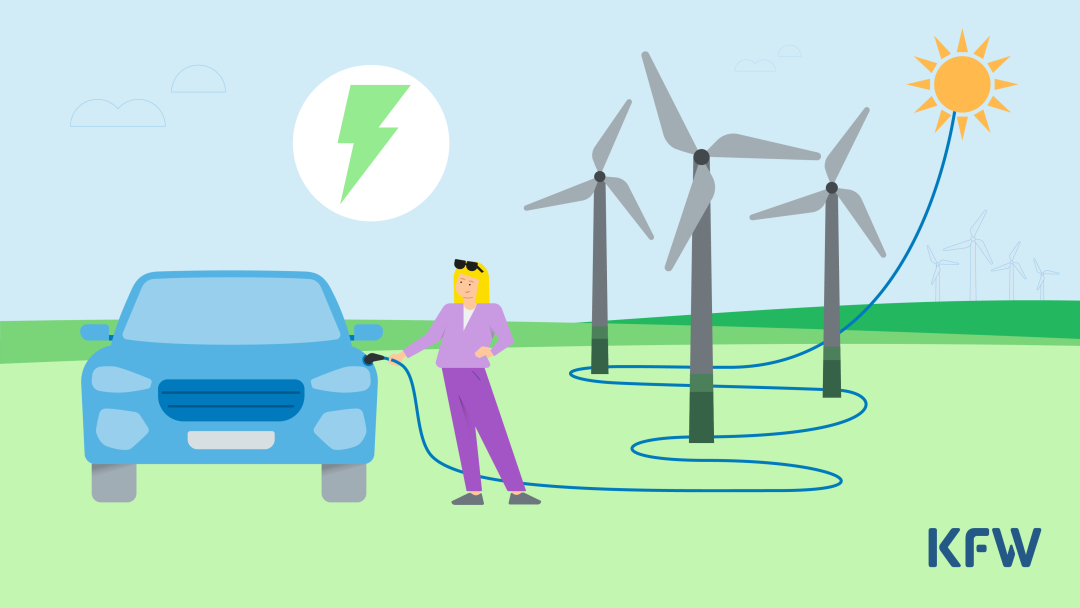
This drop aligns with the better environmental footprint of electric cars as more are being charged with electricity from renewable energy, for example. In fact, more than one third of the charging current, 36 per cent, recently came from self-generated, green electricity – a record level. A further 44 per cent was purchased as green electricity from external providers.
Supporting the market ramp-up of electric vehicles in Germany remains important”,
recommends KfW economist Rode.
Information deficits on the safety of electric vehicles should be removed, incentives for time-optimised charging should be created and charging solutions in multi-family dwellings should be simplified.
The data on household attitudes towards electric vehicles is based on the KfW Energy Transition Barometer 2025. This is a representative survey of around 4,000 to 6,000 households in Germany on decisions and attitudes around the topic of climate action. It is published annually. In 2025, 5,119 households were surveyed.
Further information on the KfW Energy Transition Barometer can be found at KfW Energy Transition Barometer | KfW.
You can find more information on electric mobility here: www.kfw.de/nachhaltig-mobil (in German).
For a picture on electromobility, please click here

Share page
To share the current page content with your network, click the button below and then select the desired option in the dialog box.
Note on data protection: By clicking the button, your browser's sharing function is used. If you select an external provider when sharing, personal data may be processed by the provider. Please read our data protection principles for more information.
Your browser does not support sharing with external services.
Alternatively, you can also copy the short link: https://www.kfw.de/s/enkBbm2w.DR5A
Copy link Link copied